Onion
- Hausa Albasa
Allium cepa · also called Bulb onion, Shallot

What it is used for
- Obesity management traditional use
- Boils, wounds and stings traditional use
- Coughs and bronchitis traditional use
- Blood sugar in diabetes lab tests only
- Infections lab tests only
Tap a use to read how it is prepared and how well it is supported.
How each use is prepared
Parts used: bulb, leaf.
Obesity management
Traditional useOther · as reported in a Nigerian ethnobotanical survey
People use it this way, but it has not been tested.
A 2025 ethnobotanical survey of the North Central zone of Nigeria records onion (Hausa name Albasa) among plants used for managing obesity. A survey shows that people use the plant for this purpose. It does not show that onion reduces weight. The category is "other" because obesity has no category in the schema. The survey's preparation details are not used here because the table layout in the opened text was ambiguous. [4]
Boils, wounds and stings
Traditional useWounds
People use it this way, but it has not been tested.
PROTA reports external use of onion for boils, felons (painful infections of a finger), wounds and stings. It is a compilation of traditional use. The opened text gives no experimental study for these uses. Do not use onion in place of medical care for a wound or infection. [1]
Coughs and bronchitis
Traditional useCough and breathing · as reported in traditional use
People use it this way, but it has not been tested.
PROTA reports internal use of onion for coughs, bronchitis, asthma and digestive disorders. The opened text gives no clinical study for these uses. A cough or breathing problem, especially in a child or in someone with asthma, needs a health worker's assessment. [1]
Blood sugar in diabetes
Lab or animal studiesBlood sugar · laboratory and review evidence
Tested in the laboratory or in animals, not in people.
A 2026 review of antidiabetic plants from the ECOWAS region lists onion among its remedies, and a 2025 review reports anti-hyperglycaemic (blood-sugar-lowering) effects of onion. The 2025 review says these claims are mostly from preclinical (laboratory or animal) work or are review-level. The evidence in the sources read is therefore weak, and no human trial of onion for blood sugar was opened. Do not use onion in place of prescribed diabetes medicine. [5][6]
Infections
Lab or animal studiesInfections · reported antibacterial property of sliced raw onion
Tested in the laboratory or in animals, not in people.
PROTA reports that sliced raw onions have antibiotic activity. A 2025 review reports antimicrobial effects of onion, mostly from laboratory work. The evidence is weak. Onion is not a substitute for treatment of a bacterial or parasitic infection. [1][6]
Safety
The sources read give no safety data for people taking onion, so safety is not established for any use. Onions are toxic to dogs, and a 2026 garlic case report quotes a dog toxic-dose figure for onion from an earlier source.
Side effects
- The sources read do not describe side effects of onion in people. Data are lacking.
Poisoning and overdose
- Onion is toxic to dogs. A 2026 report of a fatal garlic case in a dog quotes a reported toxic dose of 15 to 30 g/kg for onion. That figure is cited from an earlier source that was not opened, so it is secondary and should be read with caution. [7]
- PROTA gives no toxicity statement for onion in people. Data are lacking.
If you take other medicines
- The sources read do not describe interactions between onion and medicines. Data are lacking. Ask a clinician or pharmacist before combining onion with any prescribed medicine.
Pregnancy and breastfeeding
- The sources read do not address onion in pregnancy or breastfeeding. Data are lacking, and a clinician should advise before use.
Children
- The sources read do not give safety data for onion in children. Data are lacking.
About this plant
Onion is a cultivated plant recorded in traditional use for coughs, boils and wounds, and laboratory and review studies report blood-sugar and antibacterial effects. The sources read give no safety data for people, so safety is not established for any use, and onions are toxic to dogs.
How to recognise it
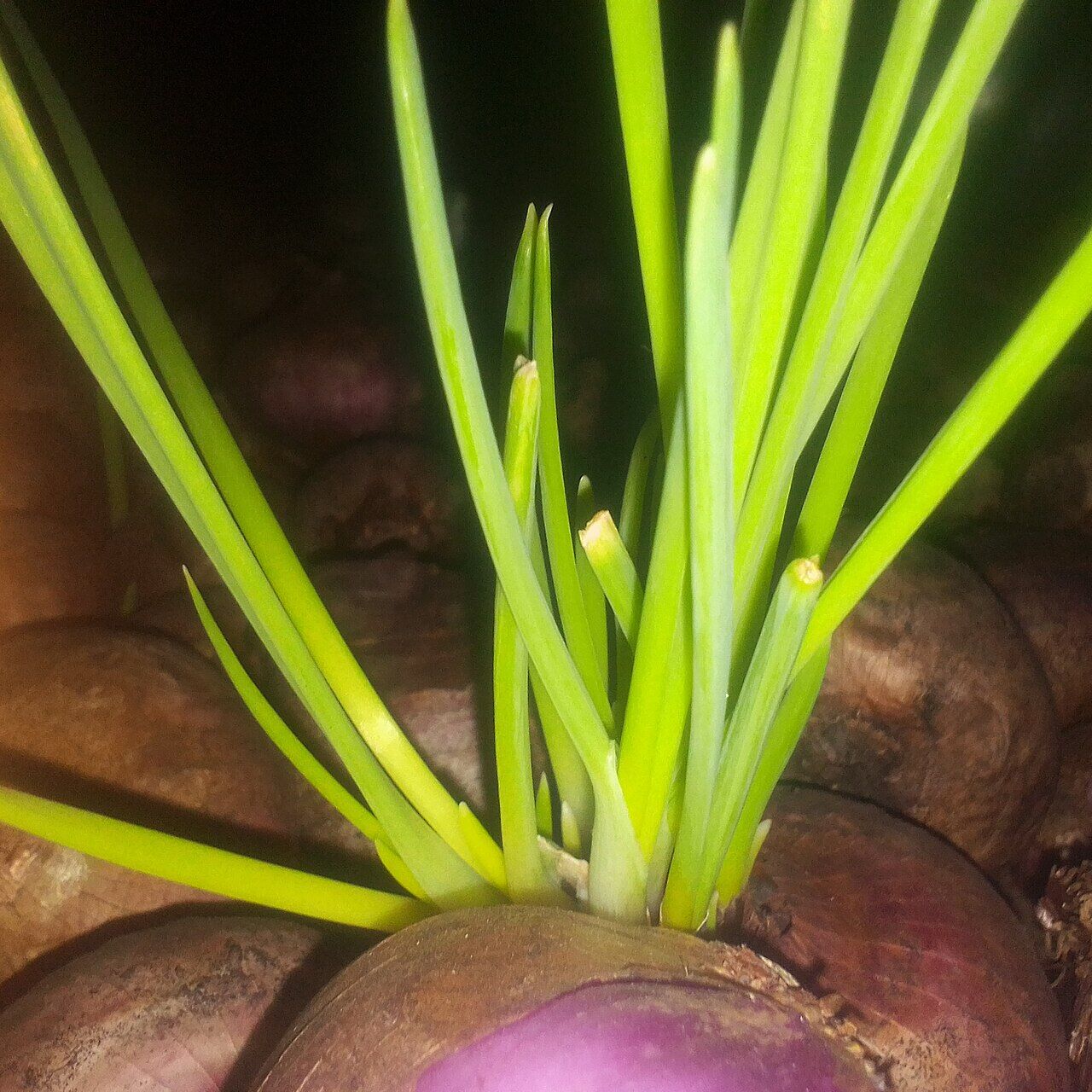
Onion is a biennial herb, a plant that lives two years and usually flowers in its second year, and it is grown as an annual in practice. The plant can reach about 100 cm in height. Its leaves are hollow, D-shaped in cross-section (flat on one side and round on the other when cut across), and number 3 to 8 per plant. The flowers form a round cluster (a spherical umbel, a head of flower stalks that spread from one point) up to 8 cm across. PROTA lists shallot as a common name for this plant. The sources read do not describe the bulb in detail or describe seeds.
Where it grows
PROTA says the species is only known from cultivation. Wild populations are not documented in the sources read.
- In Nigeria
- GBIF holds 49 occurrence records from Nigeria for this species. PROTA lists Nigeria among bulb-onion production areas. That describes cultivation, not native range. The sources read do not name Nigerian states or regions for onion.
Scientific details
- Scientific name
- Allium cepa L.
- Family
- Amaryllidaceae
- Main compounds
- propenyl cysteine sulphoxide, (Z)-thiopropanal-S-oxide, quercetin, anthocyanins
Sources
Not yet reviewed Drafted with AI from the sources below. Treat with care.
- Allium cepa (PROTA). PROTA (Plant Resources of Tropical Africa), Wageningen.
- GBIF backbone. Allium cepa L. - GBIF species match (accepted, Amaryllidaceae). Global Biodiversity Information Facility.
- GBIF occurrence search, Allium cepa, country NG (49 records). Global Biodiversity Information Facility.
- Anyanwu et al.. An Ethnobotanical Survey and Pharmacological and Toxicity Review of Medicinal Plants Used in the Management of Obesity in the North Central Zone of Nigeria. Journal of Obesity, 2025. PMID 40026359.
- Ohouko et al.. Diabetes mellitus in ECOWAS: an overview of the safety and efficacy of medicinal plants used in traditional medicine practices. Tropical Medicine and Health, 2026. PMID 41872917.
- Bedir, Almasri, Azar, et al.. Exploring the Therapeutic Potential of Allium cepa and Allium sativum Extracts: Current Strategies, Emerging Applications, and Sustainability Utilization. Biology, 2025. PMID 40906415.
- Biasibetti et al.. Fatal Garlic (Allium sativum) Toxicosis in a Dog: Gross and Histopathological Findings in a Rare Case of Systemic Hemolytic Injury. Animals (MDPI), 2026. PMID 42278144.