Lime
- Hausa Lemu tsami
Citrus aurantiifolia

What it is used for
- Fever leaf, fruit · traditional use
- Food: juice and flavouring fruit · traditional use
- Weight loss fruit · lab tests only
Tap a use to read how it is prepared and how well it is supported.
How each use is prepared
Fever
Traditional useFever · leaf, fruit · reported use
People use it this way, but it has not been tested.
In a student survey in Amassoma, Bayelsa State, lime was named among the plants used for fever, and fever was the most-cited category of illness. The respondents were students, not herbal practitioners. The Ghana essential oil study says that leaves are used as a lotion for fever and eye disease, citing an earlier source that was not read. No study of lime for fever was read. [4][5]
Food: juice and flavouring
Traditional useNutrition · fruit
People use it this way, but it has not been tested.
The World Agroforestry factsheet says limes are used across the tropics for fresh juice and as flavouring for many foods. It also lists lime juice, cordial and marmalade as commercial products. This is a food use, not evidence of a medicinal effect. [1]
Weight loss
Lab or animal studiesOther · fruit · reported use in Nigeria
How it is prepared: Wash the fruit, slice it, squeeze out the juice and drink it, about one cup of juice a day.
Tested in the laboratory or in animals, not in people.
A Nigerian survey from the North Central zone lists lime among the plants used for weight loss, with this preparation. The review that discusses the survey reports that a fruit extract containing 4 to 6 percent synephrine reduced food intake and weight gain in rats. Those rat studies were not read directly. No human trial was read, so this is not evidence that lime helps people lose weight. [3]
Safety
Data on safe use in people are lacking, apart from common food use of the juice. Lime essential oil caused mild kidney, liver and blood changes in repeated-dose rat tests at 100 and 500 mg/kg, and no acute toxicity was seen in rats at the doses tested. The Ghana study concludes that the oil can have mild blood, kidney and liver effects, even though it had been considered safe. Pregnant and breastfeeding women and children should ask a clinician before using lime as a remedy or in large amounts.
Side effects
- The Ghana study says improper use of essential oils may cause allergic reactions and skin irritation. This is a general statement about essential oils and was not tested in the study. No human side-effect data were read. [4]
Poisoning and overdose
- Essential oil from unripe lime fruit caused no acute toxicity in rats at the single doses tested (Ghana study). [4]
- In repeated-dose tests in rats, lime essential oil at 50, 100 and 500 mg/kg caused mild blood changes at 100 and 500 mg/kg. Kidney sections showed necrosis (cell death) at the medium and high doses. Liver and spleen sections showed necrosis, oedema and inflammation. This is animal data only. [4]
- The Ghana study concludes that, despite lime essential oil being considered safe, it can have mild blood, kidney and liver effects. [4]
Pregnancy and breastfeeding
- Data lacking. No source read tests lime fruit, juice or essential oil in pregnant or breastfeeding people.
Children
- Data lacking. No source read tests lime in children.
About this plant
Lime is a small, thorny citrus tree. Its juice and fruit are widely eaten and used to flavour food. It is also reported as a traditional use for fever, and for weight loss in a Nigerian survey, but the evidence is weak: the fever use comes from a student survey, and the weight-loss data come from rats. Lime essential oil caused kidney changes in repeated-dose rat tests at 100 and 500 mg/kg, so do not take the oil by mouth or use it on the skin often or over long periods.
How to recognise it
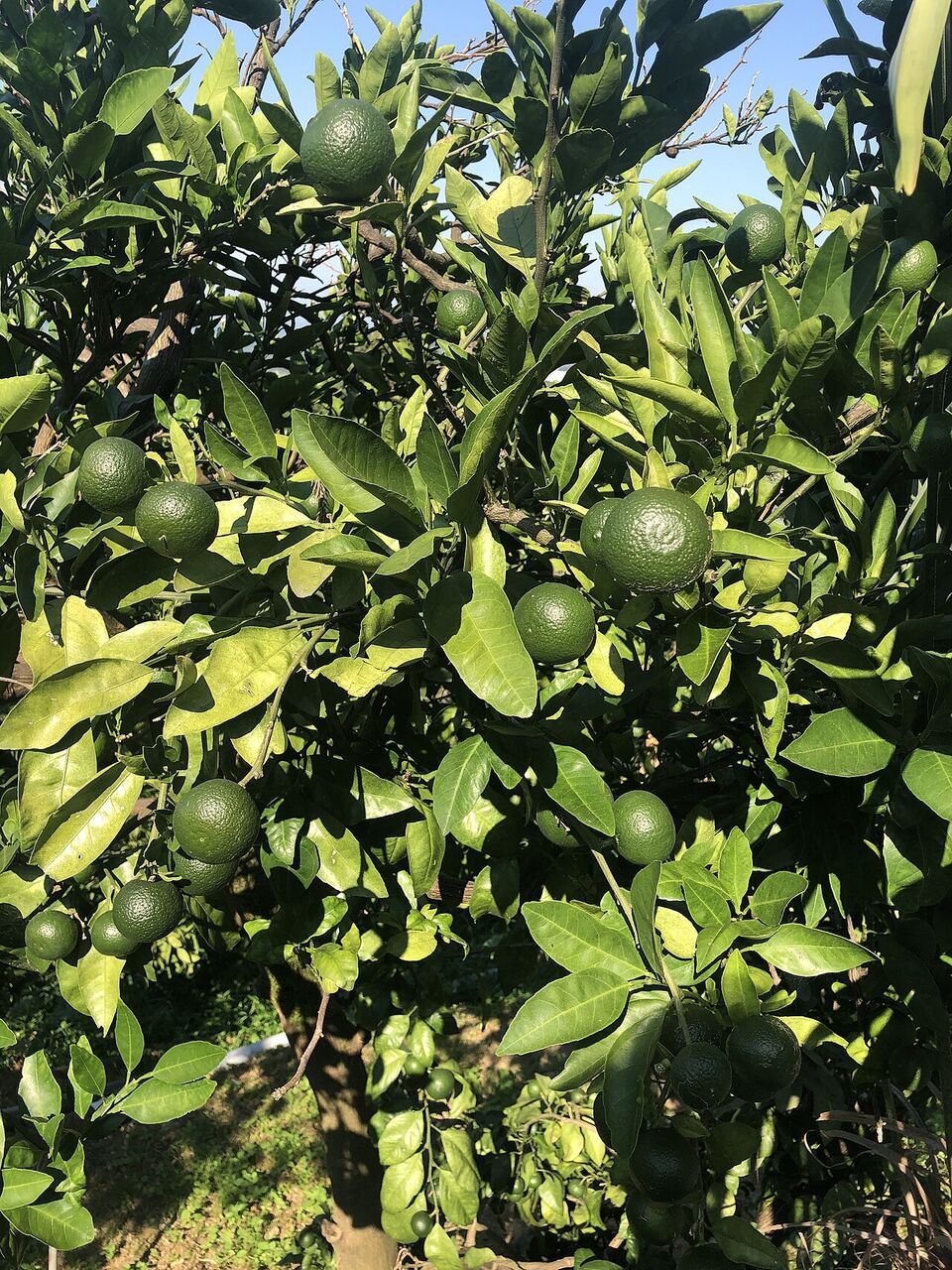
Lime is an evergreen shrub or much-branched tree up to about 5 metres tall, with many short, sharp spines on the stems and beside the leaves. The leaves are oval, small and shiny green, about 4 to 8 centimetres long, and their stalks have a narrow winged edge. The flowers are white, one to seven per leaf joint, and about 2 centimetres across. The fruit is round or oval and usually smaller than 6 centimetres across, with a very thin peel that is green or yellow and is hard to remove. The pulp is green, very sour and juicy. Sources differ on size: a 2024 review gives leaves up to 9 centimetres long and a fruit about 4 centimetres across.
Plants it can be confused with
- Lemon (Citrus limon): The Nigerian obesity survey lists lemon as a separate plant with its own Hausa name, 'Baban lemun tsami'. Local names for lemon and lime can overlap, so check the species. The sources read do not compare their toxicity.
Where it grows
- In Nigeria
- GBIF holds 47 occurrence records from Nigeria. The sources read do not name any Nigerian state or region where the plant grows.
Scientific details
- Scientific name
- Citrus aurantiifolia (Christm.) Swingle
- Family
- Rutaceae
Sources
Not yet reviewed Drafted with AI from the sources below. Treat with care.
- Citrus aurantifolia (lime) - Useful Trees and Shrubs for Uganda, factsheet. World Agroforestry (ICRAF).
- Oliveira, McManus, Sousa. A Mini-Review of the Main Effects of Essential Oils from Citrus aurantifolia, Ocimum basilicum, and Allium sativum as Safe Antimicrobial Activity in Poultry. Animals, 2024. PMID 38338025.
- Anyanwu et al.. Nigerian obesity survey and review of medicinal plants used for weight loss, North Central zone. Journal of Obesity, 2025. PMID 40026359.
- Adokoh, Asante, Acheampong. Chemical profile and in vivo toxicity evaluation of unripe Citrus aurantifolia essential oil. Toxicology Reports, 2019. PMID 31372347.
- Alade, Okpako, Ajibesin. Indigenous knowledge of herbal medicines among adolescents in Amassoma, Bayelsa State, Nigeria. Global Journal of Health Science, 2016. PMID 26234964.
- GBIF backbone. Citrus aurantiifolia (Christm.) Swingle - GBIF species match. Global Biodiversity Information Facility.
- GBIF. GBIF occurrence search, Citrus aurantiifolia, country NG. Global Biodiversity Information Facility.