Kola nut
Cola nitida · also called Cola nut

What it is used for
- Fatigue, hunger and thirst seed · traditional use
- Alertness seed · traditional use
- Digestive complaints, including diarrhoea seed · traditional use
- Morning sickness in pregnancy seed · traditional use
- Contraception seed · traditional use
- Pain and inflammation lab tests only
Tap a use to read how it is prepared and how well it is supported.
How each use is prepared
Parts used: seed.
Fatigue, hunger and thirst
Traditional useOther · seed · chewed as a stimulant
How it is prepared: Seed chewed
People use it this way, but it has not been tested.
Useful Tropical Plants describes the seed as chewed to relieve fatigue, hunger and thirst. The seed contains caffeine. No human study of this use was opened. [1]
Alertness
Traditional useOther · seed
People use it this way, but it has not been tested.
A 2025 review of Nigerian ethnobotanical research lists kola for alertness, digestion and social rituals, and names kola among the Yoruba. This reports use; it does not test the effect. [4]
Digestive complaints, including diarrhoea
Traditional useStomach and digestion · seed
People use it this way, but it has not been tested.
Useful Tropical Plants lists kola for diarrhoea, citing a 1995 reference. The 2025 review lists kola for digestion. No study that shows it works was opened. [1][4]
Morning sickness in pregnancy
Traditional useWomen's health · seed
People use it this way, but it has not been tested.
A 2021 paper reports kola nut eaten in pregnancy for morning sickness. The same paper's rat study found harm to the pups' brains, so this use should be read as a warning, not as a safe practice. [5]
Contraception
Traditional useWomen's health · seed · reported use
People use it this way, but it has not been tested.
A 2025 survey of herb sellers and practitioners in four Yoruba-speaking states lists kola seed in its Lagos table, reported by 2 respondents. The survey gives no evidence that it works or is safe. Do not use kola as contraception. [3]
Pain and inflammation
Lab or animal studiesPain and swelling · laboratory and animal tests only
How it is prepared: Methanol extract, tested in rats and mice
Tested in the laboratory or in animals, not in people.
A 2019 study found that a methanol extract reduced inflammation and pain responses in dose-dependent tests in rats and mice. No human study was opened, so this does not show a benefit in people. [8]
Safety
Animal studies link kola nut to harm to developing offspring when the mother was given it, and one rabbit study found it reduced how much metoclopramide the body was exposed to. No human safety study was opened, so the safety of kola nut in pregnancy, in children and alongside medicines is not established.
Side effects
- The sources read describe no side effects in people. The seed contains caffeine, up to 3.5% according to Useful Tropical Plants, and no human study of its effects was opened. [1]
Poisoning and overdose
- In a 2021 rat study, an aqueous extract given to pregnant rats at 400, 600 and 800 mg/kg was linked to changes in the cerebellum (the part of the brain that coordinates movement) of their pups. These included loss of Purkinje cells (a type of brain cell) and reactive astrogliosis (a response of supporting brain cells to injury). The authors note potential harm from excessive consumption. [5]
- A 2024 rat study found that kola nut exposure in the womb changed behaviour and hippocampal memory measures (the hippocampus is involved in memory) in the pups. [6]
- Useful Tropical Plants lists no known hazards, but that is a reference note, not a safety assessment. [1]
If you take other medicines
- In five rabbits, kola nut given with metoclopramide reduced the drug's exposure (AUC down 51% and Cmax down 39%; AUC is total exposure over time and Cmax is the peak level) and increased how fast it was cleared. The authors call this a possible herb-drug interaction. These are rabbit data and do not establish the effect in people. [7]
Pregnancy and breastfeeding
- Kola nut is reported to be eaten in pregnancy for morning sickness. Rat studies found harm to the offspring's brain development after exposure in the womb. No human safety data for pregnancy or breastfeeding were opened, so it should not be assumed safe. [5][6]
Children
- Useful Tropical Plants lists no known hazards but gives no child-specific data, and no other source opened gives safety data for children. [1]
About this plant
Kola nut is the seed of an African forest tree that is chewed as a stimulant and used socially in West Africa. Animal studies link kola nut to harm in developing offspring, and human safety data are lacking.
How to recognise it
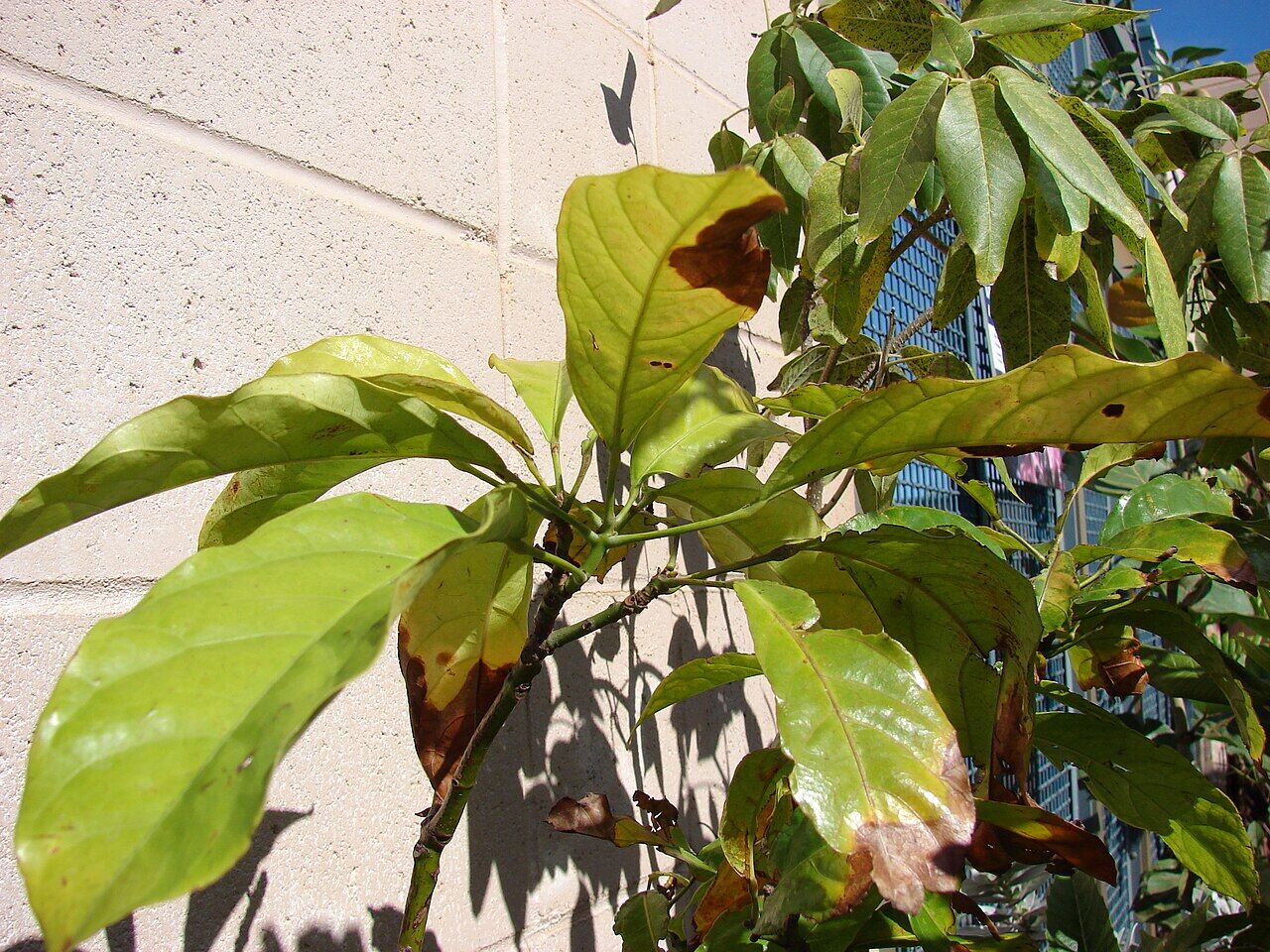
Kola nut is a large-leaved evergreen understorey tree (a tree that grows in the shade beneath taller trees). Useful Tropical Plants gives a typical height of 9 to 12 metres, with some specimens up to 27 metres. The trunk (bole) is not always straight, can be up to 1.5 metres across, and often has narrow buttresses (flared ridges at the base). The seeds, the kola nuts, are carried in the pods; a photo caption in Useful Tropical Plants says they are released when the pods split open. The sources read do not describe the leaf shape, flower colour or fruit size in detail, so identification should be confirmed by someone with botanical knowledge.
Where it grows
Lowland forest, usually up to 300 metres above sea level, and also found up to 800 metres (Useful Tropical Plants). Not documented in the sources read for cultivation.
- Native to
- Western tropical Africa, from Sierra Leone and Côte d'Ivoire east to Ghana (Useful Tropical Plants).
- In Nigeria
- GBIF holds 40 occurrence records from Nigeria for this species. A 2025 survey of herb sellers and herbal practitioners in four Yoruba-speaking states (Kwara, Lagos, Oyo and Osun) recorded kola seed among the plants they used; this does not map where the tree grows.
Scientific details
- Scientific name
- Cola nitida (Vent.) Schott & Endl.
- Family
- Malvaceae
- Older names
- Sterculia nitida, Cola vera, Cola acuminata latifolia
- Main compounds
- caffeine, theobromine, tannins
Sources
Not yet reviewed Drafted with AI from the sources below. Treat with care.
- Ken Fern. Cola nitida (Useful Tropical Plants database entry). Tropical Plants Database (tropical.theferns.info).
- GBIF. GBIF Backbone Taxonomy species match for Cola nitida (usageKey 5406687). Global Biodiversity Information Facility.
- Ibrahim MB et al.. Traditional contraceptive practices: survey of medicinal plants used to control birth in four states in Nigeria.. BMC Complementary Medicine and Therapies, 2025. PMID 40490736.
- Rafiu BO et al.. Ethnobotanical uses of plants in Nigeria: an analysis of current research trends and patterns.. Journal of Ethnobiology and Ethnomedicine, 2025. PMID 40841969.
- Atiba FA et al.. Kola nut from Cola nitida vent. Schott administered to pregnant rats induces histological alterations in pups' cerebellum.. PLoS One, 2021. PMID 33684143.
- Atiba FA et al.. Dynamic changes in the hippocampal memory index and biochemical indices in Sprague Dawley rats exposed to intrauterine kola nut.. Metabolic Brain Disease, 2024. PMID 39546053.
- Amadi CN et al.. The effects of oral administration of Cola nitida on the pharmacokinetic profile of metoclopramide in rabbits.. BMC Pharmacology and Toxicology, 2020. PMID 31907041.
- Adedayo LD et al.. Methanol extract of Cola nitida ameliorates inflammation and nociception in experimental animals.. Neurobiology of Pain, 2019. PMID 31194116.