Bitter kola
- Yoruba Orogbo
Garcinia kola

What it is used for
- Stomach and digestive upset seed · traditional use
- Cough and chest complaints seed · traditional use
- Fever seed · traditional use
- Malaria seed · traditional use
- Stimulant and aphrodisiac seed · traditional use
- Cardiovascular disease seed · lab tests only
Tap a use to read how it is prepared and how well it is supported.
How each use is prepared
Parts used: seed.
Stomach and digestive upset
Traditional useStomach and digestion · seed
How it is prepared: Fresh seeds, as reported in a Nigerian survey
People use it this way, but it has not been tested.
Reported as a traditional use in a review and in a Nigerian questionnaire survey. No human trial supports this use in the sources reviewed. [1][2]
Cough and chest complaints
Traditional useCough and breathing · seed
How it is prepared: Fresh seeds, as reported in a Nigerian survey
People use it this way, but it has not been tested.
Listed as a traditional use in a review, and fresh seeds were reported for respiratory symptoms in a Nigerian survey. No human trial supports this use in the sources reviewed. [1][2]
Fever
Traditional useFever · seed
People use it this way, but it has not been tested.
Listed as a traditional use in a review. No experimental or human study of this use is cited in the sources reviewed. [1]
Malaria
Traditional useMalaria · seed
People use it this way, but it has not been tested.
Listed as a traditional use in a review. The sources reviewed do not show that it is effective against malaria. Malaria is a serious illness that needs proper diagnosis and treatment. [1]
Stimulant and aphrodisiac
Traditional useOther · seed
People use it this way, but it has not been tested.
Listed as a traditional use in a review. The sources reviewed give no supporting study. [1]
Cardiovascular disease
Lab or animal studiesOther · seed · laboratory and animal studies only
Tested in the laboratory or in animals, not in people.
A systematic review of kolaviron, an extract of this plant, found studies only in animals and cell cultures. Human evidence is lacking, so no effect in people has been shown. [3]
Safety
Bitter kola is eaten and used in traditional medicine in Nigeria and nearby countries. The sources reviewed say that its effects have been studied mainly in animals and in the laboratory. Human safety and a standard dose have not been established, and eating large amounts of the seed may reduce fertility and cause toxicity.
Side effects
- The sources reviewed do not list specific side effects in people. Data are lacking. [4]
Poisoning and overdose
- A study in animals found that too much seed consumption caused low fertility and toxicity. [4]
- Safety and effectiveness have not been fully assessed in humans, and a standard dose has not been set. [4]
If you take other medicines
- The sources reviewed do not describe interactions with medicines. Data are lacking, so people taking prescription medicines should ask a pharmacist or doctor first. [4]
Pregnancy and breastfeeding
- The sources reviewed contain no data on use in pregnancy. Data are lacking, so it cannot be said to be safe in pregnancy. The toxicity and low-fertility findings for large seed intake in source 4 are a further reason for caution. [4]
Children
- The sources reviewed contain no data on use in children. Data are lacking, so it cannot be said to be safe for children. [4]
About this plant
Bitter kola is a tree of West and Central African forests whose seeds are used in traditional medicine. Most scientific work on it has been done in test tubes and animals, and human studies on safety and dosing are lacking.
How to recognise it
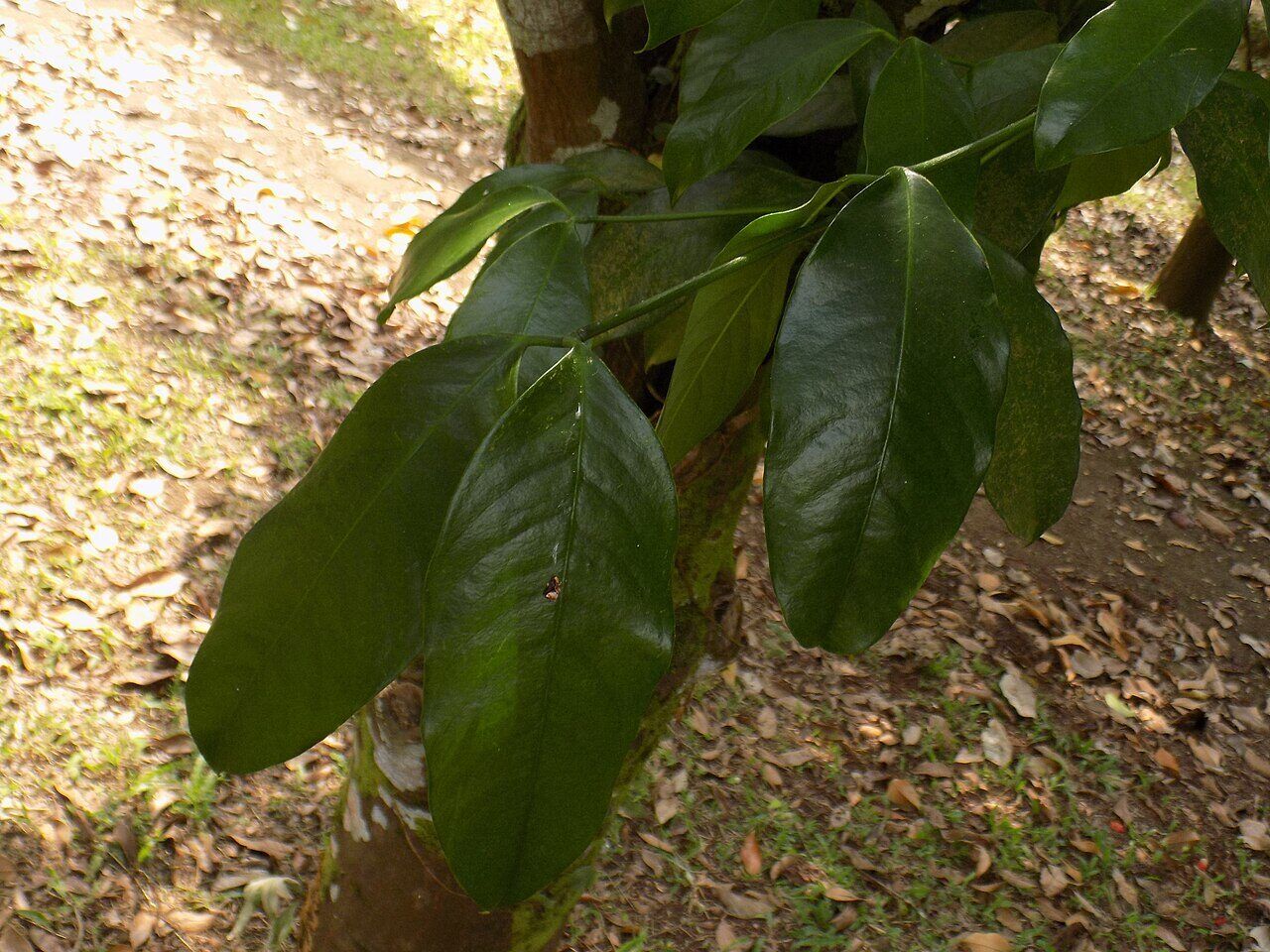
Garcinia kola is an evergreen tree, meaning it keeps its leaves all year. It usually grows 12 to 15 metres tall but can reach about 30 metres. Its bark contains an abundant sticky, resinous gum (a thick plant sap that hardens). The sources read do not describe the shape, size or arrangement of its leaves. Its flowers are greenish-white with a reddish covering of fine hairs (called indumentum), and the tree is dioecious, meaning male and female flowers are borne on separate trees. The fruit is orange-sized and smooth, with reddish-yellow skin, yellow pulp and three or four seeds.
Where it grows
An understorey tree (one that grows in the shade beneath taller trees) of dense rainforest, often in wet places such as riverbanks and swamps, found up to about 1,200 metres. The PMC review calls it a sub-Saharan African forest tree.
- Native to
- Tropical Africa, from Sierra Leone to southern Nigeria, on into Zaire and Angola
- In Nigeria
- The range given in two sources reaches southern Nigeria, and the tree is often found cultivated or growing around villages. GBIF holds 62 occurrence records from Nigeria (queried 2026-10-09).
Scientific details
- Scientific name
- Garcinia kola Heckel
- Family
- Clusiaceae
- Older names
- Garcinia akawaensis, Garcinia autraniana, Garcinia bergheana, Garcinia dinklagei, Garcinia giadidii, Garcinia ndongensis, Garcinia nitidula
- Main compounds
- garcinol, garcinoic acid, tocotrienol (reported from seed)
Sources
Not yet reviewed Drafted with AI from the sources below. Treat with care.
- Tauchen J et al.. Garcinia kola: a critical review on chemistry and pharmacology of an important West African medicinal plant. Phytochemistry Reviews, 2023. PMID 37359709.
- Ukut UO et al.. Traditional use of Garcinia kola Heckel in Nigeria - the results of questionnaire survey compared with scientific evidence. BMC Complementary Medicine and Therapies, 2026. PMID 41699612.
- Olatoye FJ et al.. The role of Kolaviron, a bioflavonoid from Garcinia kola, in the management of cardiovascular diseases: A systematic review. Heliyon, 2024. PMID 38449600.
- Dogara AM et al.. Biological Evaluation of Garcinia kola Heckel. Advances in Pharmacological and Pharmaceutical Sciences, 2022. PMID 35528115.
- Ajao AA, Mukaila YO, Sabiu S. Wandering through southwestern Nigeria: An inventory of Yoruba useful angiosperm plants. Heliyon, 2022. PMID 35024488.
- Garcinia kola. Useful Tropical Plants database.
- Abdulrahman Mahmoud Dogara et al. (name from the PMC copyright line; full author list not confirmed). Biological Evaluation of Garcinia kola Heckel. Advances in Pharmacological and Pharmaceutical Sciences, via PubMed Central; DOI 10.1155/2022/3837965, 2022.
- GBIF (Global Biodiversity Information Facility). GBIF occurrence search for Garcinia kola (taxonKey 3189563), country NG. Global Biodiversity Information Facility, 2026.