Afang
- Igbo Okazi
- Ibibio Afang
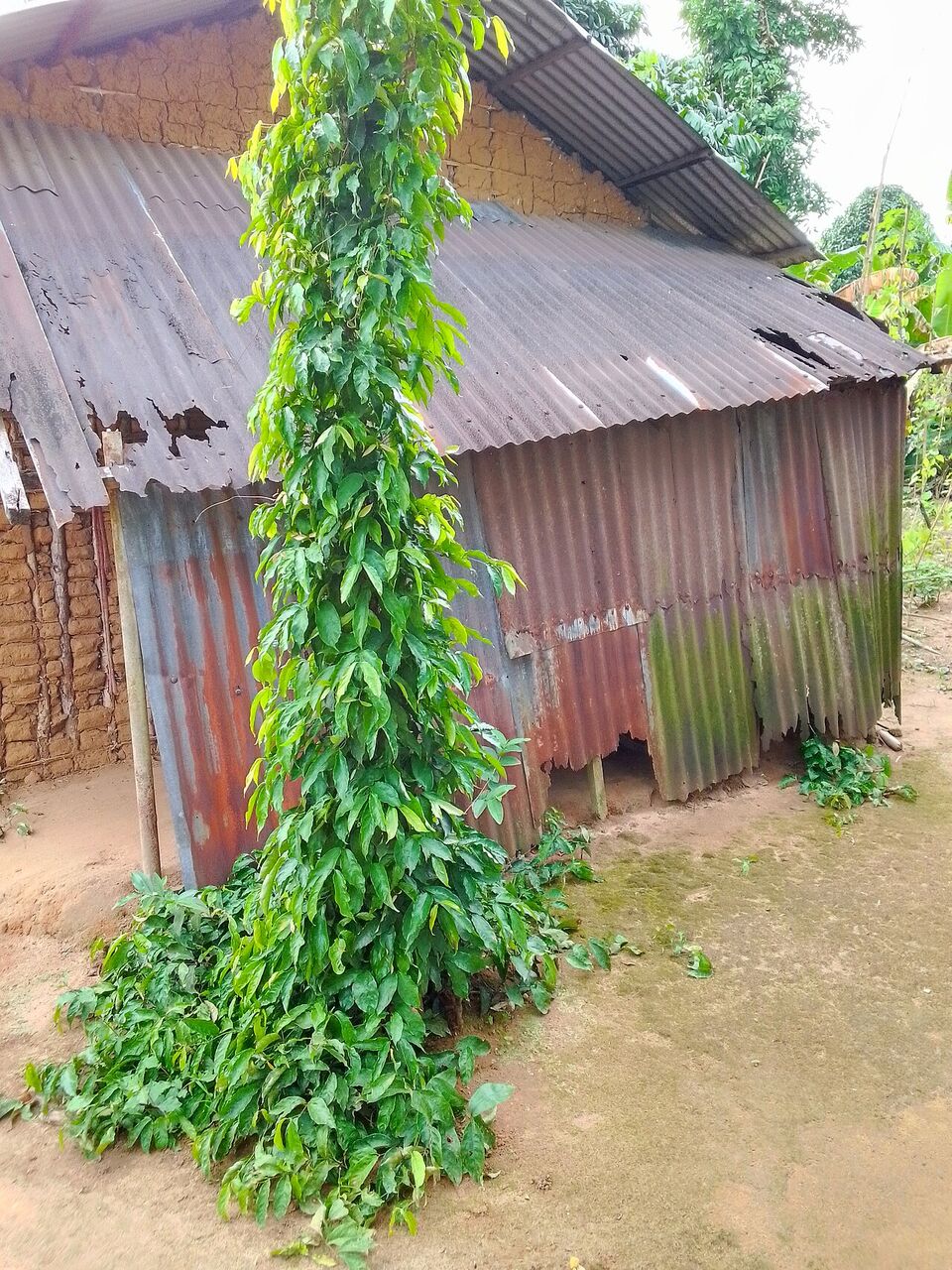
Gnetum africanum · also called Okazi, Wild spinach, African jointfir

What it is used for
- Piles traditional use
- High blood pressure traditional use
- Enlarged spleen traditional use
- Sore throat traditional use
- Constipation traditional use
- Pain in childbirth stem · traditional use
- Warts and boils leaf · traditional use
- Brain enzyme and antioxidant effects leaf · lab tests only
Tap a use to read how it is prepared and how well it is supported.
How each use is prepared
Parts used: leaf, stem.
Piles
Traditional useOther · haemorrhoids
People use it this way, but it has not been tested.
Reported in Nigerian use in PROTA and in Useful Tropical Plants. No study was read. [1][2]
High blood pressure
Traditional useBlood pressure
People use it this way, but it has not been tested.
Reported in PROTA and Useful Tropical Plants. No human study of blood pressure was read. This is a use reported by people, not a tested effect. [1][2]
Enlarged spleen
Traditional useOther
People use it this way, but it has not been tested.
Reported in PROTA and Useful Tropical Plants. No study was read. [1][2]
Sore throat
Traditional useCough and breathing
People use it this way, but it has not been tested.
Reported in PROTA and Useful Tropical Plants. No study was read. [1][2]
Constipation
Traditional useStomach and digestion · as a purgative or enema
People use it this way, but it has not been tested.
Useful Tropical Plants lists a cathartic use and an enema for constipation. PROTA lists the leaf as a purgative in Nigeria. No study was read. [1][2]
Pain in childbirth
Traditional useWomen's health · stem
People use it this way, but it has not been tested.
Useful Tropical Plants reports a stem tisane for pain in childbirth. Only one source reports this use, and no study was read. [1]
Warts and boils
Traditional useSkin · leaf
People use it this way, but it has not been tested.
Useful Tropical Plants reports chopped leaves applied to warts and boils. Only one source reports this use, and no study was read. [1]
Brain enzyme and antioxidant effects
Lab or animal studiesOther · leaf
Tested in the laboratory or in animals, not in people.
Two studies by the same group used leaf alkaloid extracts. One tested acetylcholinesterase inhibition and antioxidant effects in the laboratory and in fruit flies (Oboh 2023). The other tested protection against manganese toxicity in fruit flies (Oboh 2018). Neither was tested in people, and neither shows a benefit for Alzheimer's disease or any other illness in humans. [4][5]
Safety
Little is known about the risks of Gnetum africanum leaves in people. Useful Tropical Plants lists its hazards as "None known", but this is a list of reported hazards, not a safety study. No human studies of side effects, pregnancy, children or drug interactions were found in the sources read. Data are lacking, so no conclusion about risk can be drawn.
Side effects
- Useful Tropical Plants lists hazards as "None known". No human study of side effects was read. [1]
Poisoning and overdose
- No toxicity study in people was found in the sources read. The two fruit-fly studies test protection against toxicity, not the toxicity of the extract itself. [4][5]
If you take other medicines
Pregnancy and breastfeeding
- Data lacking. The stem tisane is reported for pain in childbirth, but no study of safety in pregnancy or breastfeeding was found in the sources read. [1]
Children
About this plant
A forest climber whose shredded leaves are a common vegetable in Nigerian soups, known as afang and okazi. Its leaves are also reported in traditional remedies for several complaints; the evidence for these is mostly traditional, with a few laboratory studies.
How to recognise it
A dioecious liana (male and female plants are separate), reported up to 10 m long (PROTA) or up to 12 m (Useful Tropical Plants). The leaves are simple and arranged in opposite pairs. The blade is ovate-oblong to elliptical-oblong, 5-14 cm by 2-5 cm, thick and papery, hairless, pale green above and paler underneath, with 3 to 6 pairs of strongly curved side veins that loop near the margin (PROTA). Leaves are eaten raw or cooked (Nwidu 2019). The sources read do not describe the flowers or fruit.
Where it grows
Understorey of humid rainforest, and the edges of primary and secondary forest and farm fallows. PROTA reports it from sea level to 1200 m.
- Native to
- Tropical West Africa, from south-east Nigeria and western Cameroon south to Angola (Useful Tropical Plants). PROTA gives the range as Nigeria to the Central African Republic and Angola.
- In Nigeria
- GBIF lists 22 occurrence records with country NG for this species. This is a record count only, not a survey. Nwidu 2019 places okazi among the Igbo of south-east Nigeria and afang among the Ibibio of the south-south region.
Scientific details
- Scientific name
- Gnetum africanum Welw.
- Family
- Gnetaceae
- Older names
- Thoa africana (Welw.) Doweld
- Main compounds
- alkaloids
Sources
Not yet reviewed Drafted with AI from the sources below. Treat with care.
- Useful Tropical Plants: Gnetum africanum. Useful Tropical Plants.
- PROTA: Gnetum africanum (Pl@ntUse). PROTA (Plant Resources of Tropical Africa), Pl@ntUse.
- Nwidu LL and co-authors. An Investigation of Potential Sources of Nutraceuticals from the Niger Delta Areas, Nigeria for Attenuating Oxidative Stress. Medicines (Basel), 2019. PMID 30669529.
- Oboh G and co-authors. African Jointfir (Gnetum africanum) and Editan (Lasianthera africana) leaf alkaloid extracts exert antioxidant and anticholinesterase activities in fruit fly (Drosophila melanogaster). Food Science & Nutrition, 2023. PMID 37324853.
- Oboh G and co-authors. Effect of Alkaloid Extract from African Jointfir (Gnetum africanum) Leaves on Manganese-Induced Toxicity in Drosophila melanogaster. Oxidative Medicine and Cellular Longevity, 2018. PMID 30693067.
- GBIF species match and occurrence records for Gnetum africanum Welw.. Global Biodiversity Information Facility.