Hospital too far
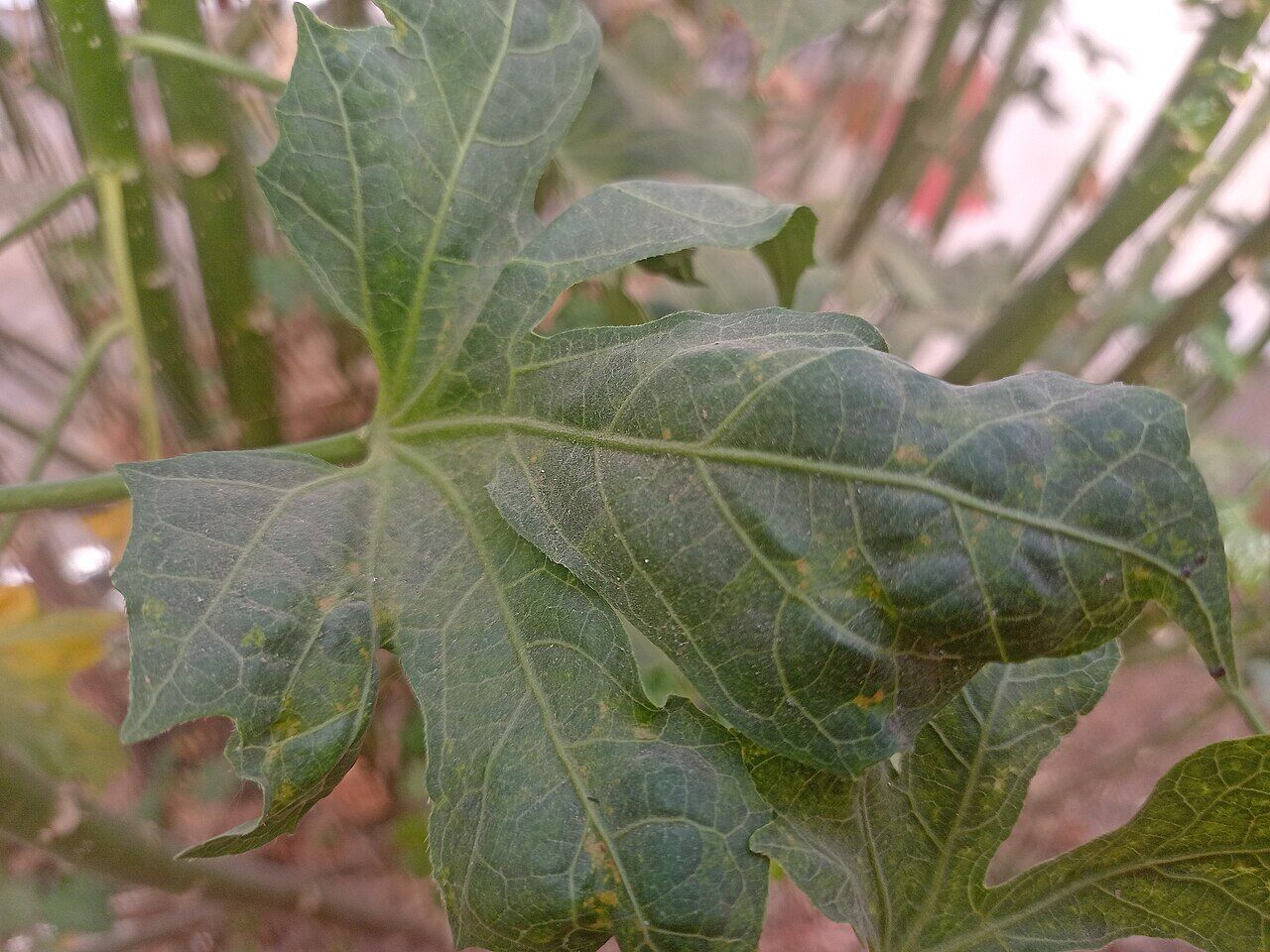
Jatropha tanjorensis · also called Catholic vegetable, Jatropha

What it is used for
- Blood tonic in soups leaf · traditional use
- Building up the blood traditional use
- Symptoms of diabetes leaf · traditional use
- Blood sugar and weight leaf · lab tests only
- Fertility and pregnancy leaf · lab tests only
- Liver fibrosis in rats leaf · lab tests only
- Antibacterial and antifungal activity leaf · lab tests only
Tap a use to read how it is prepared and how well it is supported.
How each use is prepared
Parts used: leaf.
Blood tonic in soups
Traditional useOther · leaf
How it is prepared: Leaves used in soups and tonics, with no amounts given in the sources read
People use it this way, but it has not been tested.
The full text of source 4 says the leaves are widely used in tonics and soups originally from Nigeria and are known to increase blood volume. No study or reference for the blood-volume claim is given, and no human study was found. This is a traditional claim, not evidence of an effect. [4]
Building up the blood
Traditional useOther
How it is prepared: Extract in water, taken by mouth, 2 glasses daily, as recorded in the survey
People use it this way, but it has not been tested.
A survey of indigenous herbal medicine knowledge among adolescents in Amassoma, Bayelsa State, Nigeria. It records "Hospital too far" for blood, with the preparation above. The survey does not say which plant part is used, and it reports use only, not an effect. [5]
Symptoms of diabetes
Traditional useBlood sugar · leaf · infusion of leaves, southwestern Nigeria
How it is prepared: Leaf infusion taken by mouth, as described in the full text of source 4
People use it this way, but it has not been tested.
The full text of source 4 reports that a leaf infusion is taken by mouth in southwestern Nigeria for symptoms of diabetes. This is reported folk use. The same paper reports rat data for blood glucose (see the next entry), but no human study was found. [4]
Blood sugar and weight
Lab or animal studiesBlood sugar · leaf
How it is prepared: Aqueous and ethanolic leaf extracts given by mouth at 200 and 400 mg/kg for 6 weeks
Tested in the laboratory or in animals, not in people.
Rat study on a high-fat diet, with no human data. The authors report that the extracts lowered serum glucose and lipid profile compared with the untreated high-fat-diet group, and they suggest antidiabetic potential. The title also refers to antiobesity activity. Not a human trial. [4]
Fertility and pregnancy
Lab or animal studiesWomen's health · leaf
How it is prepared: Aqueous leaf extract given by mouth at 500 mg/kg once daily to female rats
Tested in the laboratory or in animals, not in people.
A rat study of 40 female rats. The abstract reports better fertility potential and gestational outcome after the extract. It says the plant is popularly called "Hospital Too Far" and is used by pregnant women and women of reproductive age, and that the scientific evidence was hardly known. This does not show that the plant helps women, or that it is safe in pregnancy. [2]
Liver fibrosis in rats
Lab or animal studiesOther · leaf · carbon tetrachloride model
How it is prepared: Extract given by mouth to rats in weeks 7 to 9 of a 9-week carbon tetrachloride exposure
Tested in the laboratory or in animals, not in people.
Rat study of liver fibrosis. The abstract reports that the extract restored antioxidant enzyme activity, reduced lipid peroxidation and fibrosis markers, and reduced liver lesions and collagen deposits. Animal evidence only; not a human trial. [3]
Antibacterial and antifungal activity
Lab or animal studiesInfections · leaf · laboratory
How it is prepared: Solvent extracts of leaves and four isolated compounds, tested in the laboratory
Tested in the laboratory or in animals, not in people.
Laboratory tests against bacteria and fungi, by agar-well and disk diffusion. These are test-tube results only; nothing was tested in people. [1]
Safety
The toxicity figures come from rats and mice. In the fertility study the aqueous leaf extract had an oral LD50 above 5000 mg/kg in rats. The acute test in the 2023 paper showed no deaths at doses up to 2000 mg/kg. No human safety study was found. Use in pregnancy, children and with medicines has not been studied in the sources read, so do not use it as a remedy without advice.
Side effects
- No side effects in people were found in the sources read. The sources read do not list side effects of the leaf in animals beyond the acute toxicity results above. [4]
Poisoning and overdose
- Aqueous leaf extract: oral LD50 above 5000 mg/kg in rats, as reported in the fertility study abstract. [2]
- Acute toxicity test in rats under an OECD guideline: no deaths at 5, 50, 300 or 2000 mg/kg for aqueous and ethanolic extracts of J. tanjorensis and of Fraxinus micrantha. The 2023 paper reports this as a single test covering both plants. [4]
- Kidney effects were not reported in the sources read, and no kidney study of this plant was found. [4]
- Whether the seeds, latex or phorbol esters of J. tanjorensis are toxic was not established in the sources read. Do not treat the plant as free of the toxins known in the genus (see the jatropha-curcas record for J. curcas).
If you take other medicines
- No drug interaction studies were found. The extracts lowered blood glucose in rats, so use with diabetes medicines could add to the effect. This is an inference from animal data, not a reported interaction. [4]
Pregnancy and breastfeeding
- Data are lacking. The rat fertility study reports better fertility and gestational outcome, which is not a safety finding. The abstract says pregnant women use the plant, but no study tested its safety in pregnancy. [2]
Children
- Data are lacking. No study in the sources read tested the leaf in children. [2]
About this plant
A perennial herb of West Africa, known in Nigeria as "Hospital too far" and eaten or used as a tonic and soup ingredient. Almost all of the scientific evidence comes from laboratory tests and rat or mouse studies; no human trial was found in the sources read.
How to recognise it
Described in the sources read as a perennial herb, and as a hybrid whose form is intermediate between Jatropha curcas and Jatropha gossypifolia. Its height and full habit are not stated in the sources read. Leaf shape, lobing, size, colour, any red or purple tinge, leaf stalks and latex were not described in the sources read, so a botanical source is needed. Flowers and fruit are not described in the sources read either. It grows as a weed in crops, along shrub edges and roadsides, and on disturbed ground in wet forest areas of West Africa.
Plants it can be confused with
- Jatropha curcas: The closest relative in this archive (see the jatropha-curcas record). Because J. tanjorensis is described as intermediate between J. curcas and J. gossypifolia, the two can look alike. J. curcas is poisonous, and its seeds are the most dangerous part, as set out in the jatropha-curcas record. Do not assume J. tanjorensis has the same toxicity, or that it is safe. The data in this record come from rat and mouse studies of J. tanjorensis itself. Identification from photos alone is uncertain.
- Jatropha gossypifolia: Named as one of the two parent forms of J. tanjorensis. Its toxicity is not covered in this record.
Where it grows
In wet forest areas of West Africa it is a typical weed of crops, shrub edges, roadsides and disturbed ground.
- Native to
- West Africa, in wet forest areas. The sources read do not give a wider native range.
Scientific details
- Scientific name
- Jatropha tanjorensis J.L.Ellis & Saroja
- Family
- Euphorbiaceae
Sources
Not yet reviewed Drafted with AI from the sources below. Treat with care.
- Viswanathan MB, Jeya Ananthi JD, Sathish Kumar P. Antimicrobial activity of bioactive compounds and leaf extracts in Jatropha tanjorensis. Fitoterapia, 2012. PMID 22884742.
- Ukoh I, Sunday B, Antai A, Arikpo S, Nsa H, David I. Consumption of Aqueous Leaf Extract of Jatropha tanjorensis Improves Fertility Potential and Gestational Outcome in Virgin Female Wistar Rats. Niger J Physiol Sci, 2022. PMID 38243569.
- Oyeyemi IT, Ajayi IT, Nabofa EEW. Jatropha tanjorensis J.L.Ellis & Saroja inhibited carbon tetrachloride-induced fibrogenesis in Wistar rats. Nat Prod Res, 2026. PMID 40411811.
- Srivastava S, Virmani T, Haque MR, et al.. Extraction, HPTLC Analysis and Antiobesity Activity of Jatropha tanjorensis and Fraxinus micrantha on High-Fat Diet Model in Rats. Life (Basel), 2023. PMID 37374031.
- Alade GO, Okpako E, Ajibesin KK, Omobuwajo OR. Indigenous Knowledge of Herbal Medicines among Adolescents in Amassoma, Bayelsa State, Nigeria. Global Journal of Health Science, 2015. PMID 26234964.