Ehuru
Monodora myristica · also called African nutmeg, Calabash nutmeg
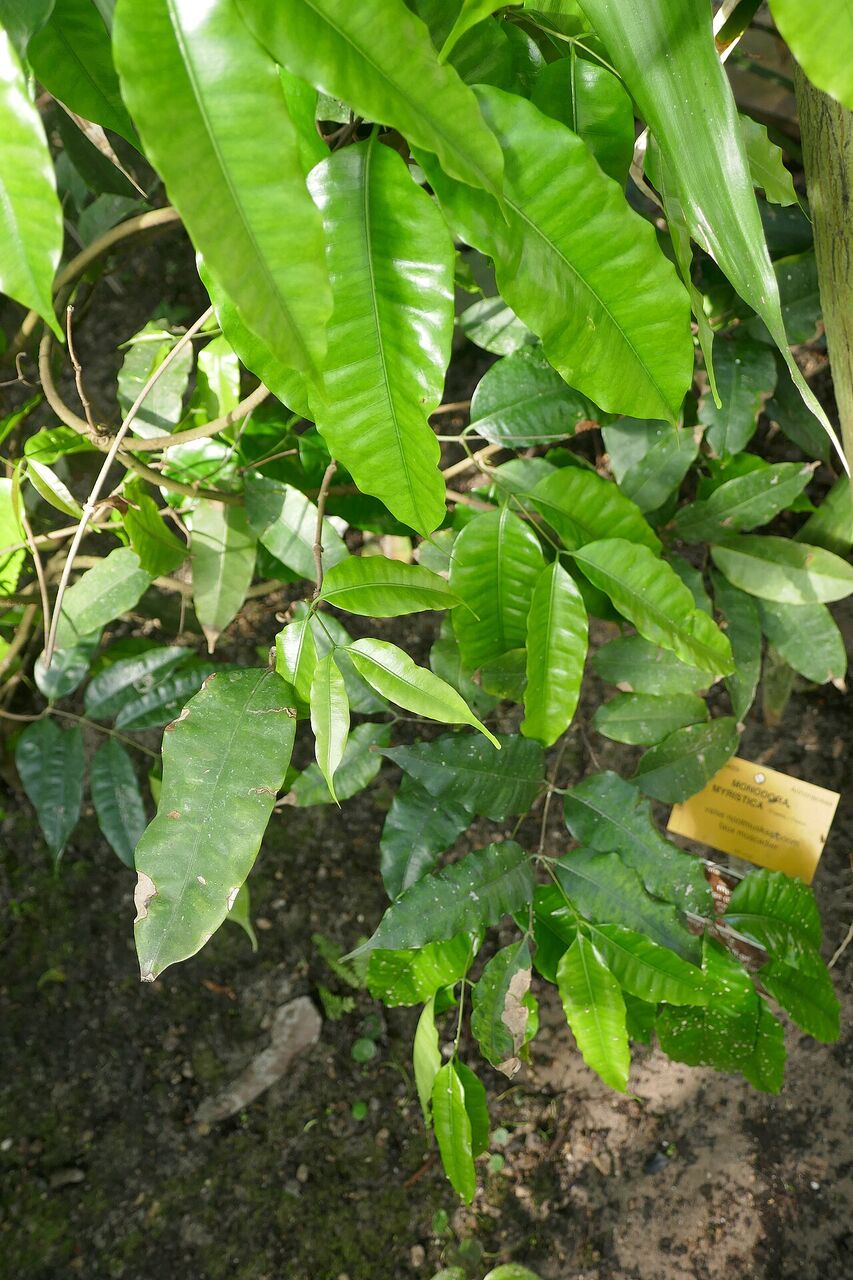
.jpg)
What it is used for
- Stomach-ache bark · traditional use
- Febrile pains bark · traditional use
- Haemorrhoids bark · traditional use
- Eye troubles bark · traditional use
- Food seasoning seed · traditional use
- Bacterial infections seed · lab tests only
Tap a use to read how it is prepared and how well it is supported.
How each use is prepared
Parts used: bark, seed.
Stomach-ache
Traditional useStomach and digestion · bark
People use it this way, but it has not been tested.
Useful Tropical Plants gives the bark for stomach-ache, and a Nigerian study cites the same use in its introduction. These are reports of traditional use only. No trial in people was found in the sources read. [1][4]
Febrile pains
Traditional useFever · bark · pain with fever
People use it this way, but it has not been tested.
Useful Tropical Plants gives the bark for febrile pains, and a Nigerian study cites the same use. These are reports of traditional use only. No trial in people was found in the sources read. [1][4]
Haemorrhoids
Traditional useOther · bark · piles
People use it this way, but it has not been tested.
Useful Tropical Plants gives the bark for haemorrhoids, and a Nigerian study cites the same use. These are reports of traditional use only. No trial in people was found in the sources read. [1][4]
Eye troubles
Traditional useOther · bark
People use it this way, but it has not been tested.
Useful Tropical Plants gives the bark for eye troubles, and a Nigerian study lists eye diseases among its traditional uses. These are reports of traditional use only. No eye study was found in the sources read. [1][4]
Food seasoning
Traditional useNutrition · seed
People use it this way, but it has not been tested.
This is a food use, not a treatment. Useful Tropical Plants also lists the seed as antiemetic (against vomiting), stomachic and tonic, as traditional reports only. A 2018 study measured the nutrient and antinutrient content of the seed. [1][4][5][7]
Bacterial infections
Lab or animal studiesInfections · seed
Tested in the laboratory or in animals, not in people.
Essential oil from seeds of plants grown in Southeast Nigeria showed antibacterial activity against the bacteria tested in laboratory tests. This does not show that the seed or oil works in people. [4]
Safety
Little safety information exists for African nutmeg. The one safety study read was done in rats, and it reported liver toxicity and effects on sperm, so the plant should not be taken for these uses without advice from a health professional. Do not use it in pregnancy, while breastfeeding, or for children unless a health professional advises it, because no safety data were found for these groups.
Side effects
- No human side-effect data were found in the sources read. The only safety study read was done in rats (see toxicity). [6]
Poisoning and overdose
- A 2015 rat study of Monodora myristica extracts reported liver toxicity (hepatotoxicity) and effects on sperm. The same study's micronucleus and genotoxicity (DNA damage) statements are inconsistent, so DNA damage is not settled. [6]
If you take other medicines
- No drug interaction data were found in the sources read. [6]
Pregnancy and breastfeeding
- Not documented in the sources read. No human pregnancy or breastfeeding data were found. The rat study reported sperm effects, which is a reason for caution. [6]
Children
- Not documented in the sources read. No data on use in children were found. [6]
About this plant
African nutmeg is a forest tree of tropical Africa. Its seeds are eaten as a seasoning in parts of Nigeria, and its bark appears in traditional remedies. The health studies found so far are mainly laboratory and animal work, so they do not show that it treats any illness.
How to recognise it
The tree usually grows 10 to 35 m tall and occasionally up to 40 m. Useful Tropical Plants describes it as deciduous, meaning it sheds its leaves for part of the year. The leaves are alternate, so one leaf grows at each point on the stem, and they droop on a leaf stalk (petiole). Each leaf blade is elliptical to oblong, broadest near the tip and narrowing to the stalk, and can reach about 45 cm long by 20 cm wide. The flowers are scented and orchid-like, and the fruit holds pulp and seeds.
Where it grows
Evergreen and deciduous forest, often of the riverine or lakeside fringing type (Useful Tropical Plants).
- Native to
- Tropical Africa, from Gambia to Sudan and Kenya, south to Angola and Tanzania (Useful Tropical Plants).
- In Nigeria
- GBIF holds 66 occurrence records from Nigeria (GBIF occurrence search, country NG). The sources read name no Nigerian states or regions.
Scientific details
- Scientific name
- Monodora myristica (Gaertn.) Dunal
- Family
- Annonaceae
Sources
Not yet reviewed Drafted with AI from the sources below. Treat with care.
- Monodora myristica (African nutmeg), Useful Tropical Plants database. Useful Tropical Plants.
- GBIF Backbone Taxonomy: species match for Monodora myristica (usageKey 3154077, accepted, Annonaceae). GBIF.
- GBIF occurrence search: Monodora myristica (taxonKey 3154077), country NG, limit 0. GBIF.
- Okechukwu, Ugwuona, Ofoedu, et al.. Chemical composition, antibacterial efficacy, and antioxidant capacity of essential oil and oleoresin from Monodora myristica and Tetrapleura tetraptera in Southeast Nigeria. Scientific Reports, 2022. PMID 36400870.
- Okpoghono, Ukperegbulem, Onyesom, et al.. Neuroprotective aftermath of Monodora myristica and Glycyrrhiza glabra against cassava diet containing vacuum gas oil induced brain injury in Wistar rats. Toxicology Reports, 2024. PMID 38375414.
- Owumi, Oloidi, Oloye, et al.. Toxicological and phytoprotective effect of Keayodendron bridelioides and Monodora myristica extracts in Wister rats. Pharmacognosy Research, 2015. PMID 26109784.
- Agiriga, Siwela. Effects of Thermal Processing on the Nutritional, Antinutrient, and In Vitro Antioxidant Profile of Monodora myristica (Gaertn.) Dunal Seeds. Preventive Nutrition and Food Science, 2018. PMID 30386752.
- Monodora myristica, Wikipedia. Wikipedia.
- Wikimedia Commons: Category:Monodora myristica (file list and imageinfo metadata). Wikimedia Commons.