Boundary tree
- Igbo Ogirisi
- Yoruba Akoko
- Hausa Aduruku
- Bini Ikhimi
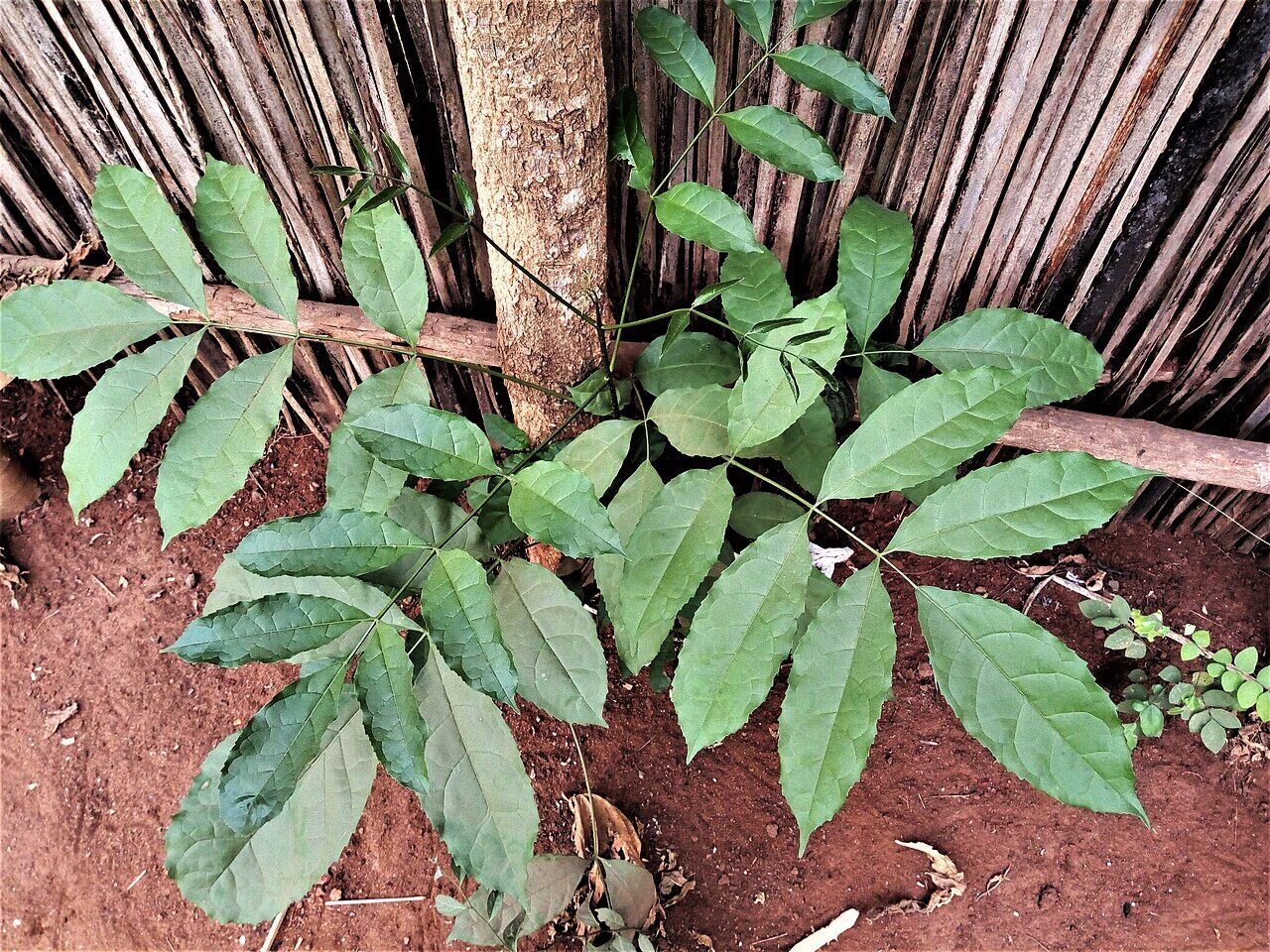
Newbouldia laevis

What it is used for
- Heart pain leaf · traditional use
- Diarrhoea and dysentery leaf · traditional use
- Cough traditional use
- Epilepsy and convulsions in children traditional use
- Eye inflammation and infection leaf · traditional use
- Septic wounds, abscesses and ulcers bark · traditional use
- Pain, swelling and convulsions leaf, root · lab tests only
Tap a use to read how it is prepared and how well it is supported.
How each use is prepared
Parts used: leaf, bark, root.
Heart pain
Traditional useOther · leaf
How it is prepared: Leaf ash mixed with salt
People use it this way, but it has not been tested.
Useful Tropical Plants reports this use. It is a traditional report only, and no study of it was found in the sources read. [1]
Diarrhoea and dysentery
Traditional useStomach and digestion · leaf
How it is prepared: Leaf decoction taken with Psidium guajava (guava)
People use it this way, but it has not been tested.
Useful Tropical Plants reports this use. It is a traditional report only, and no study of it was found in the sources read. [1]
Cough
Traditional useCough and breathing
How it is prepared: Decoction (the part used is not stated in the source)
People use it this way, but it has not been tested.
Useful Tropical Plants reports a decoction for coughs, diarrhoea and dysentery, without naming the part used. The diarrhoea and dysentery use is listed above with the leaves. It is a traditional report only, and no study of it was found in the sources read. [1]
Epilepsy and convulsions in children
Traditional useOther
How it is prepared: Decoction (the part used is not stated in the source)
People use it this way, but it has not been tested.
Useful Tropical Plants reports that a decoction is given to children for epilepsy and convulsions. It is a traditional report only. No safety or efficacy study in children was found in the sources read, so it should not be taken as evidence that the plant is safe or effective for children. [1]
Eye inflammation and infection
Traditional useOther · leaf
How it is prepared: Leaf decoction
People use it this way, but it has not been tested.
Useful Tropical Plants reports a leaf decoction for ophthalmia and conjunctivitis. It is a traditional report only, and no eye study was found in the sources read. [1]
Septic wounds, abscesses and ulcers
Traditional useWounds · bark
How it is prepared: Applied externally to the skin
People use it this way, but it has not been tested.
Useful Tropical Plants reports that the bark is applied externally for septic wounds, abscesses and ulcers. It is a traditional report only, and no study of it was found in the sources read. The same source reports use for snake-bite, which this record does not cover. [1]
Pain, swelling and convulsions
Lab or animal studiesPain and swelling · leaf, root
Tested in the laboratory or in animals, not in people.
A 2023 study tested methanol leaf and root extracts in Wistar rats for analgesic (pain-relieving), anti-inflammatory and anticonvulsant (seizure-reducing) activity. The abstract reports dose-dependent activity at 100 to 400 mg/kg. Animal results do not show that the plant works in people. [7]
Safety
Traditional uses are reported for coughs, diarrhoea, eye complaints and wounds, but the sources read do not show that the plant treats any of them. One laboratory study of a leaf extract found DNA-damaging effects, so the plant should be avoided unless a health professional advises otherwise. Do not use it in pregnancy, while breastfeeding, or for children, because no safety data were found for these groups.
Side effects
- No human side-effect data were found in the sources read. In an acute toxicity test in rats, no toxic signs or deaths were reported over 14 days (see toxicity). [6][7]
Poisoning and overdose
- An aqueous leaf extract was mutagenic (it caused genetic changes) in the Ames test and the SOS Chromotest, and cytotoxic (toxic to cells) in onion root cells (Allium cepa). These are laboratory tests, not tests in people, but they point to possible DNA damage. [6]
- In an acute oral toxicity test in rats, methanol leaf and root extracts were given at a maximum dose of 2000 mg/kg. No toxic signs or deaths were reported over 14 days. [7]
If you take other medicines
Pregnancy and breastfeeding
- Not documented in the sources read. Useful Tropical Plants reports leaves cooked in palm-oil soup and taken by pregnant women to ease delivery and, after birth, to promote milk supply, as a traditional use. No safety study in pregnancy or breastfeeding was found. [1]
Children
- Not documented in the sources read. Useful Tropical Plants reports a decoction given to children for epilepsy and convulsions, as a traditional use. No safety data for children were found. [1]
About this plant
Boundary tree is a tree of West and Central African forests and regrowth areas. Traditional uses are reported for coughs, diarrhoea, eye complaints and wounds, but the sources read do not show that it treats any of these. Laboratory tests of a leaf extract found DNA-damaging effects, so it should be avoided unless a health professional advises otherwise.
How to recognise it
This is an evergreen tree, meaning it keeps its leaves all year. It usually grows 3 to 8 m tall in the west of its range and up to 20 m tall in the east, according to Useful Tropical Plants. The shape, arrangement and size of the leaves are not documented in the sources read, so they are not described here. Flowers, fruit and seeds are also not described in the sources read. A second botany source was tried: the PROTA pages on Pl@ntUse gave a missing page and empty stubs, and the NParks page gave no usable text.
Where it grows
Secondary forest, dry forest and regenerating forest (Useful Tropical Plants).
- Native to
- West tropical Africa, from Senegal to Cameroon and Gabon (Useful Tropical Plants).
- In Nigeria
- GBIF holds 219 occurrence records from Nigeria (GBIF occurrence search, country NG). The sources read name no Nigerian states or regions.
Scientific details
- Scientific name
- Newbouldia laevis (Beauverd) Seem.
- Family
- Bignoniaceae
Sources
Not yet reviewed Drafted with AI from the sources below. Treat with care.
- Newbouldia laevis (Boundary tree), Useful Tropical Plants database. Useful Tropical Plants.
- GBIF Backbone Taxonomy: species match for Newbouldia laevis (usageKey 4091370, accepted, Bignoniaceae). GBIF.
- GBIF occurrence search: Newbouldia laevis (taxonKey 4091370), country NG, limit 0. GBIF.
- Umeyor, Anaka, Kenechukwu, Agbo, Attama, et al.. Development, in vitro and in vivo evaluations of novel lipid drug delivery system of Newbouldia laevis (P. Beauv.). Nanobiomedicine, 2016.
- Mukaila, Oladipo, Ogunlowo, et al.. Which Plants for What Ailments: A Quantitative Analysis of Medicinal Ethnobotany of Ile-Ife, Osun State, Southwestern Nigeria. Evidence-based Complementary and Alternative Medicine (eCAM), 2021.
- Alabi, Okorie, Simon-Oke, Atanda, et al.. Cellular toxicity and DNA damage induced by Newbouldia laevis used for male infertility treatment in prokaryotic and eukaryotic models. Protoplasma, 2024. PMID 37438649.
- Ukwubile, Ikpefan, Dibal, Umeano, et al.. Pharmacognostic profiles, evaluation of analgesic, anti-inflammatory and anticonvulsant activities of Newbouldia laevis (P. Beauv.) Seem. ex Bureau leaf and root extracts in Wistar rats. Journal of Ethnopharmacology, 2023. PMID 37211190.
- Wikimedia Commons: Category:Newbouldia laevis (file list and imageinfo metadata). Wikimedia Commons.