African pear
- Igbo Ube
Pachylobus edulis · also called Bush pear, Butter fruit
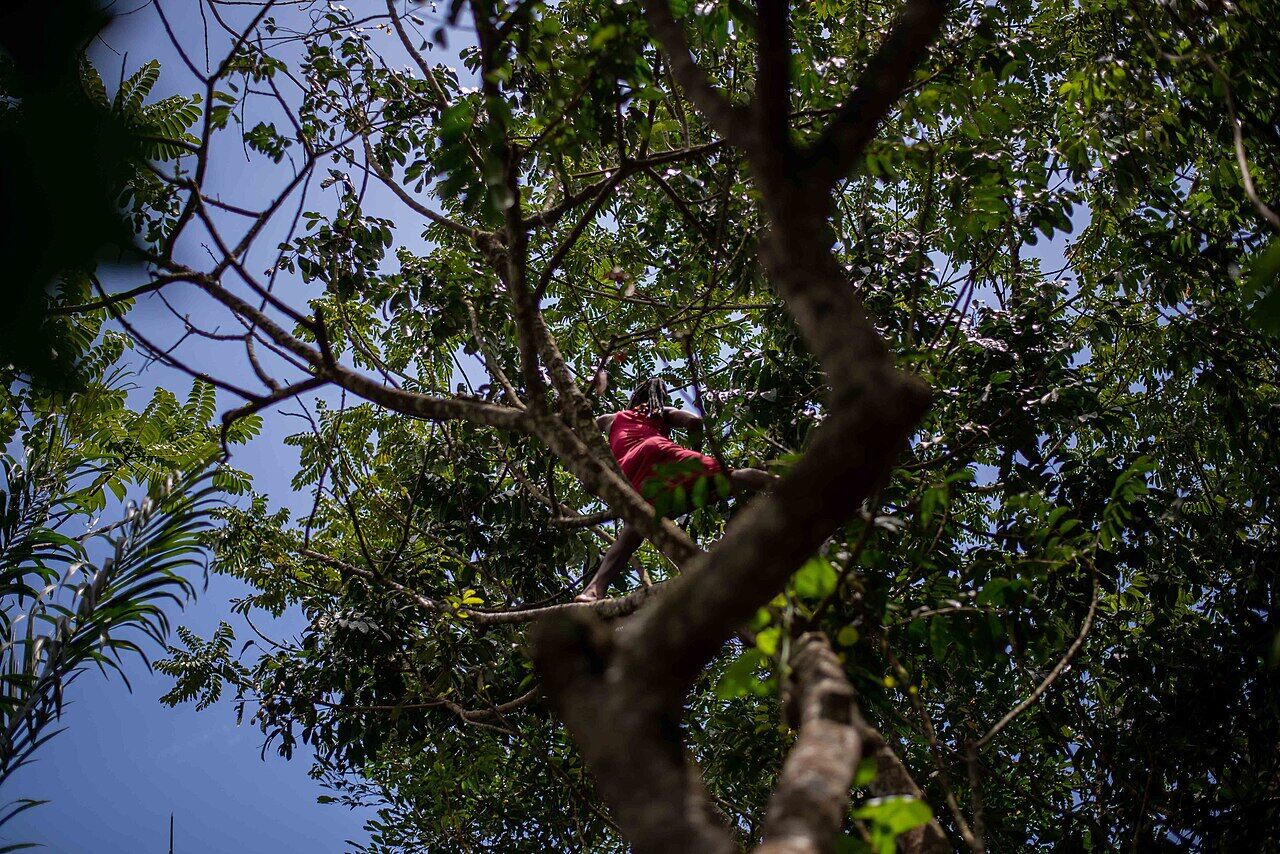
_01.jpg)
What it is used for
- Skin and wounds leaf · traditional use
- Stretch marks leaf · traditional use
- Acute malaria leaf · traditional use
- Wounds leaf · traditional use
- Labour pain leaf · traditional use
- Epilepsy in children traditional use
- Stunted growth in children traditional use
Tap a use to read how it is prepared and how well it is supported.
How each use is prepared
Parts used: leaf, bark, resin, fruit.
Skin and wounds
Traditional useSkin · leaf · leaf juice
How it is prepared: Juice of the leaves, as reported by Yoruba users
People use it this way, but it has not been tested.
Reported in an ethnobotanical review of the genus. No experimental study of this use was read. [2]
Stretch marks
Traditional useSkin · leaf
People use it this way, but it has not been tested.
Listed as a traditional use in an ethnobotanical review of the genus. No experimental study of this use was read. [2]
Acute malaria
Traditional useMalaria · leaf
People use it this way, but it has not been tested.
Listed as a traditional use in an ethnobotanical review of the genus. No experimental or human study of this use was read. Do not use this plant to treat malaria in place of a tested treatment. [2]
Wounds
Traditional useWounds · leaf
People use it this way, but it has not been tested.
Listed as a traditional use in an ethnobotanical review of the genus. No experimental study of this use was read. [2]
Labour pain
Traditional useWomen's health · leaf
How it is prepared: Dried leaves, as reported in the review
People use it this way, but it has not been tested.
Listed as a traditional use in an ethnobotanical review of the genus. No safety data for use in labour was read, so it should not be used in labour without medical advice. [2]
Epilepsy in children
Traditional useOther
How it is prepared: Decoction, as reported in the review (plant part not stated)
People use it this way, but it has not been tested.
Listed as a traditional use in an ethnobotanical review of the genus. No safety data and no experimental study were read. Epilepsy needs medical treatment, and a decoction should not replace it. [2]
Stunted growth in children
Traditional useNutrition
How it is prepared: Decoction, as reported in the review (plant part not stated)
People use it this way, but it has not been tested.
Listed as a traditional use in an ethnobotanical review of the genus. No experimental study of this use was read. [2]
Safety
A preclinical study of an aqueous-methanol fraction of the leaves found low acute toxicity in animals, and it reported no kidney or liver damage at the doses tested over 28 days. There are no human safety data in the sources read, so use in pregnancy and in children is not established.
Poisoning and overdose
- In an animal study of an aqueous-methanol fraction of the leaves, the LD50 was above 5000 mg/kg. At 200 to 600 mg/kg for 28 days there was no kidney or liver toxicity, but there was a decrease in some blood measures. The same study reported chromosome effects in an onion (Allium cepa) test. This is preclinical evidence only. [3]
If you take other medicines
- Not documented in the sources read.
Pregnancy and breastfeeding
- Not documented in the sources read. The leaves are used for labour pain in traditional practice, but no safety data for pregnancy were read. [2]
Children
- Not documented in the sources read. Decoctions are used for epilepsy and stunted growth in children in traditional practice, but no safety data for children were read. [2]
About this plant
A tree from West and Central Africa whose pulp is eaten and whose leaves, bark and resin are used in traditional medicine. The uses are reported in surveys and reviews, with no human trials read, and a preclinical study of a leaf extract found low acute toxicity in animals.
How to recognise it
African pear is a tree that is grown as a shade tree in cocoa and coffee plantations (PROTA). Its leaves are alternate (set singly along the branch) and imparipinnate, meaning the leaf is divided into a pair of leaflets along both sides of a central stalk with one leaflet at the tip. Each leaf has 11 to 19 leaflets. The stalk can be up to 7.5 cm long, and the leaves have no stipules (small leaf-like structures at the base of the stalk). The leaflets are oblong to oblong-lanceolate or ovate-lanceolate, up to about 20 cm long (occasionally up to 30 cm) and about 6 to 8 cm wide, broadly wedge-shaped to rounded and slightly uneven at the base, and pointed at the tip. The fruit has an edible pulp (flesh), which PROTA says is eaten boiled or grilled. The sources read do not give flower or bark details, so these are not described here.
Where it grows
- Native to
- West and Central Africa, wild and cultivated (PROTA, French version).
- In Nigeria
- The 2023 review of the genus (Swana Leseho et al.) reports that the name 'ube' for this species is used mainly in south-eastern Nigeria. The review does not give a survey of wild or cultivated populations, and the sources read give no more detail.
Scientific details
- Scientific name
- Pachylobus edulis G.Don
- Family
- Burseraceae
- Older names
- Dacryodes edulis
Sources
Not yet reviewed Drafted with AI from the sources below. Treat with care.
- Dacryodes edulis (G.Don) H.J.Lam - PROTA (Plant Resources of Tropical Africa), French version. PROTA / Pl@ntUse.
- Swana Leseho et al.. The Genus Dacryodes Vahl.: Ethnobotany, Phytochemistry and Biological Activities. Pharmaceuticals, 2023.
- Ononamadu CJ et al.. Toxicological study of aqueous-methanol solvent fraction of methanol extract of Dacryodes edulis leaves. Toxicology Reports, 2020.
- Pachylobus edulis G.Don - GBIF species match. Global Biodiversity Information Facility.