Ugba
- Igbo Ugba
Pentaclethra macrophylla · also called African oil bean

What it is used for
- Ugba, a fermented seed food seed · traditional use
- Seed oil used as food seed · traditional use
- Applied to wounds fruit · traditional use
- Antidiarrhoeal leaf · lab tests only
Tap a use to read how it is prepared and how well it is supported.
How each use is prepared
Parts used: seed, leaf, fruit.
Ugba, a fermented seed food
Traditional useNutrition · seed
How it is prepared: Seeds are boiled for 3 to 12 hours and the seed coat removed. The cotyledons are sliced, drained, wrapped in banana or Mallotus leaves and left to ferment for 4 to 6 days as a snack, or 7 to 10 days as a soup condiment (PROTA).
People use it this way, but it has not been tested.
A food use. PROTA describes ugba as a snack or condiment with a meaty taste. Fermentation reduces the toxic compound in the seed (see safety). [1][5][6]
Seed oil used as food
Traditional useNutrition · seed
How it is prepared: Oil extracted from the seed.
People use it this way, but it has not been tested.
PROTA reports the seed is used as a source of edible oil. This is a food use, not a medical use. [1]
Applied to wounds
Traditional useWounds · fruit · ripe fruit
How it is prepared: Ripe fruits applied externally.
People use it this way, but it has not been tested.
PROTA says the ripe fruits are applied externally to wounds. The source does not cite the studies behind this use, and no trial was found. [1]
Antidiarrhoeal
Lab or animal studiesStomach and digestion · leaf · leaf extracts in animals
How it is prepared: Aqueous and ethanol leaf extracts, given to experimental animals.
Tested in the laboratory or in animals, not in people.
Animal study only (Akah 1999). No human study was found, so this is not evidence of use in people. [9]
Safety
The seed is toxic raw. It contains a growth-retarding compound (paucine) and other anti-nutritional factors, and fermentation into ugba reduces them. Animal studies of a fermented seed extract found no toxic effects, but these were short studies in rats, and no human safety data were found.
Side effects
Poisoning and overdose
- The unfermented seed is inedible. It contains the growth-retardant alkaloid paucine (caffeoylputrescine), along with saponins, sterols and glycosides (Olasupo 2016, PROTA). Fermentation to ugba is reported to remove this toxicity. [6][1]
- Bacillus isolates from ugba produced in south-eastern Nigeria carried genes for toxins, including haemolysin and enterotoxin genes (Ahaotu 2013). [8]
- Rat studies: no deaths up to 5000 mg/kg given once, and no histopathological change at 200 to 800 mg/kg daily for 14 days. The authors say the extract may be termed safe (Ugbogu 2020). These are animal data only. [7]
If you take other medicines
Pregnancy and breastfeeding
- Data lacking. None of the sources read reports studies in pregnant or breastfeeding women. PROTA reports that an infusion of the bark is used in Cameroon as an abortifacient. [1][6][7]
Children
About this plant
A forest tree whose seeds are the basis of ugba, a fermented food widely eaten in south-eastern Nigeria. The raw seed is not safe to eat. Studies of leaf and seed extracts have been done only in animals, and no human clinical trials were found.
How to recognise it
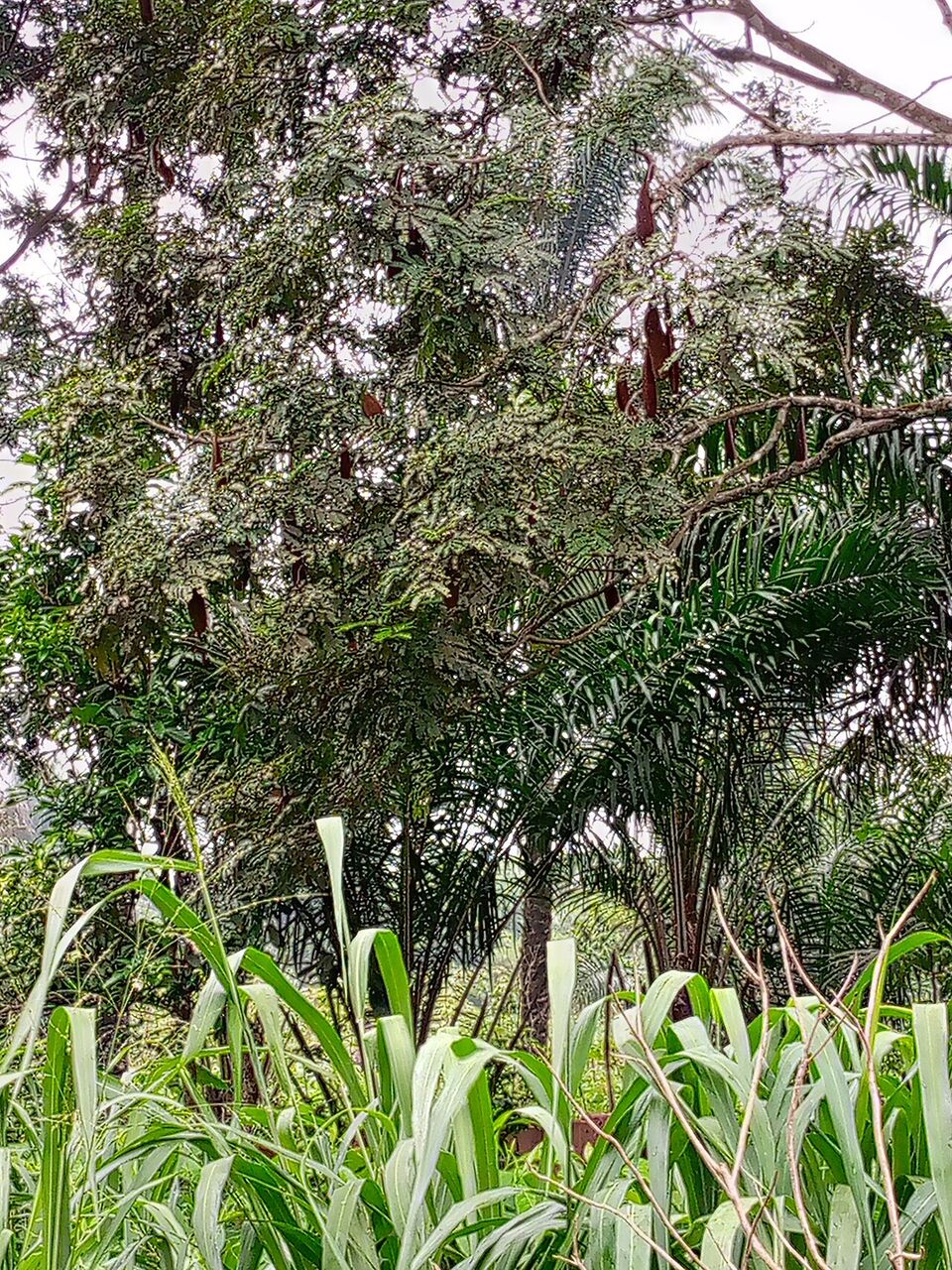
A tree of the forest zone, whose bole is often gnarled and twisted. The leaves are bipinnate, with a row of small leaflets along each division. The flowers are small, strongly fragrant and rich in nectar, and are visited by honeybees. The fruit is a dark brown pod that opens explosively and holds 5 to 8 flattened, purplish-brown seeds. The seeds are the part used, for food and for an edible oil.
Plants it can be confused with
- Pentaclethra eetveldeana: The other African species of the genus. PROTA says it can be told apart by its smaller leaflets and simple hairs. No toxicity information for this species was found in the sources read.
Where it grows
Primary and secondary forest and coastal savanna, often near creeks and rivers. Most common at altitudes up to 500 m (PROTA). It is planted or kept along the edges of home gardens and farms.
- Native to
- Forest zone of West and Central Africa, from Senegal to south-eastern Sudan and to Angola, and on São Tomé and Príncipe
- In Nigeria
- In Nigeria the stands are now largely confined to the south-eastern region, and regeneration there is thought to be inadequate (PROTA). Ugba is described as made by the Igbo (Ogueke 2010, Olasupo 2016). PROTA places the ugba snack in south-western Nigeria, which conflicts with those sources. GBIF holds 178 occurrence records for the species in Nigeria; this is a record count, not a survey.
Scientific details
- Scientific name
- Pentaclethra macrophylla Benth.
- Family
- Fabaceae
- Main compounds
- caffeoylputrescine (paucine), saponins, sterols, glycosides
Sources
Not yet reviewed Drafted with AI from the sources below. Treat with care.
- PROTA (Plant Resources of Tropical Africa). Pentaclethra macrophylla (PROTA). Pl@ntUse, PROTA.
- Pentaclethra macrophylla. Useful Tropical Plants.
- GBIF species match: Pentaclethra macrophylla (accepted name). Global Biodiversity Information Facility.
- GBIF occurrence search, Nigeria (record count only). Global Biodiversity Information Facility.
- Ogueke CC, Nwosu JN, Owuamanam CI, et al.. Ugba: the fermented African oil bean seed (review of published studies). Pakistan Journal of Biological Sciences, 2010. PMID 21848073.
- Olasupo NA, Okorie CA, Oguntoyinbo FA, et al.. Fermented African oil bean (Pentaclethra macrophylla) seed: production and microbiology of ugba. Frontiers in Microbiology, 2016. PMID 27540371.
- Ugbogu OC, Nwoku CH, Ude VC, et al.. Bioactive constituents and toxicological profile of aqueous fermented Pentaclethra macrophylla seed extract in rats. Avicenna Journal of Phytomedicine, 2020. PMID 31921612.
- Ahaotu IE, Anyogu A, Njoku OO, et al.. Molecular identification of Bacillus spp. from ugba fermentation and their toxin genes. International Journal of Food Microbiology, 2013. PMID 23376783.
- Akah PA, Aguwa CN, Agu RU. Studies on the antidiarrhoeal properties of Pentaclethra macrophylla leaf extracts. Phytotherapy Research, 1999. PMID 10404533.