Uziza
- Igbo Uziza
Piper guineense · also called Ashanti pepper, Benin pepper, Uziza seeds
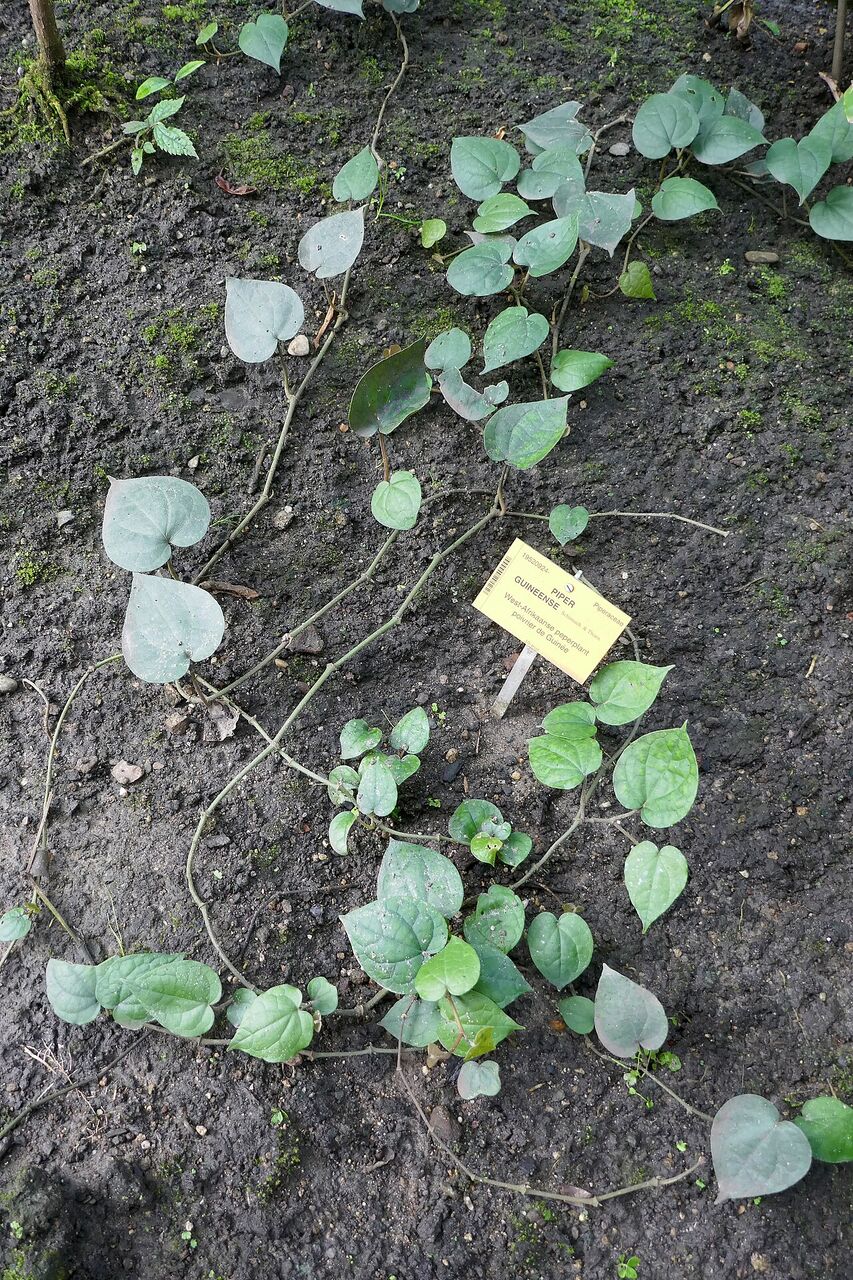
.jpg)
What it is used for
- Spice in soups and food leaf, fruit · traditional use
- Obesity leaf, seed · traditional use
- High blood pressure seed · lab tests only
- Bacterial infection seed · lab tests only
Tap a use to read how it is prepared and how well it is supported.
How each use is prepared
Parts used: leaf, fruit, seed.
Spice in soups and food
Traditional useNutrition · leaf, fruit · leaves and dried fruit
How it is prepared: Leaves and fruit used fresh or dried as a spice
People use it this way, but it has not been tested.
Useful Tropical Plants records this food use, citing Edible Wild Plants of Tanzania and Cornucopia II. This is a food use and not a medical claim. [1]
Obesity
Traditional useOther · leaf, seed · reported use in a survey
How it is prepared: Cut leaves or ground seeds used in pepper soup, as reported in the survey
People use it this way, but it has not been tested.
Eleven respondents in a 2025 survey of medicinal plants in North Central Nigeria reported this use. A survey records what people say they do; it does not test whether it works. No clinical study was opened. [3]
High blood pressure
Lab or animal studiesBlood pressure · seed · laboratory study in rats
How it is prepared: n-hexane fraction of a seed extract, 200 and 400 mg/kg per day, given to rats
Tested in the laboratory or in animals, not in people.
In rats with hypertension induced by L-NAME (a chemical that raises blood pressure in animals), the extract lowered systolic and diastolic pressure. No human study was opened. This does not show that it is safe or effective for people with high blood pressure. [5]
Bacterial infection
Lab or animal studiesInfections · seed · laboratory tests only
How it is prepared: Seeds soaked and air-rested, then extracted and tested in the laboratory
Tested in the laboratory or in animals, not in people.
Seed extracts showed antioxidant and antibacterial activity against E. coli, S. aureus and P. aeruginosa in laboratory tests. Laboratory results do not show effects in people. [4]
Safety
Animal studies give mixed results: a leaf extract was tolerated at high doses in rats, but fruit preparations were harmful at much lower doses. No human safety study was opened, so safety in pregnancy, in children and alongside medicines is not established.
Side effects
- The obesity survey records 'None reported' for side effects among its respondents. This is one survey's answer and not a safety study. [3]
Poisoning and overdose
- In rats, a methanol leaf extract was well tolerated at 5000 mg/kg by mouth, and an ethanol leaf extract had an LD50 (the dose that killed half the animals in the test) above 3000 mg/kg by mouth. The survey also reports that a leaf extract was safe at 2 g/kg by mouth in mice. [3]
- Fruit preparations were much more toxic in rats: the LD50 was 85.1 mg/kg by intravenous injection (into a vein), 224 mg/kg by intraperitoneal injection (into the abdomen) and 1122 mg/kg by mouth. [3]
- Seed powder was toxic to maize weevils, and a methanol leaf extract had a 96-hour LC50 of 205.35 mg/L in fish. These are pest and aquatic tests, not human data. [3]
- Useful Tropical Plants lists no known hazards, but that is a reference note, not a safety assessment. [1]
If you take other medicines
Pregnancy and breastfeeding
- No source opened gives safety data in pregnancy or breastfeeding. The survey and the rat studies do not address human pregnancy, and the high-dose fruit toxicity figures above are the only animal harm data. [3]
Children
- Useful Tropical Plants lists no known hazards but gives no child-specific data, and no other source opened gives safety data for children. [1]
About this plant
Uziza, known in Nigeria as a pepper for soups, is a climbing shrub whose leaves and dried fruit are used as a spice. Animal studies give mixed results, and human safety data are lacking.
How to recognise it
Uziza, also called Ashanti pepper, is an evergreen climbing shrub whose woody stems can grow 4 to 20 metres tall. It climbs over trees and other plants with adventitious roots (roots that grow from the stem). The plant is dioecious (male and female flowers grow on separate plants), so both male and female plants are needed to produce fruit and seed. The leaves and dried fruit are used fresh and dried as a spice. The sources read do not describe the leaf shape, flowers or fruit size in detail, so identification should be confirmed by someone with botanical knowledge.
Where it grows
Evergreen rainforest and forest edges, usually in wet places and gallery forest along rocky rivers, at elevations of about 750 to 1650 metres (Useful Tropical Plants).
- Native to
- Tropical Africa, from Senegal to southern Sudan, south to the DR Congo, Zambia and Tanzania (Useful Tropical Plants).
- In Nigeria
- GBIF holds 134 occurrence records from Nigeria for this species. A 2025 survey in the North Central Zone of Nigeria names it uziza and records its use in pepper soup; the survey is not a distribution record.
Scientific details
- Scientific name
- Piper guineense Schumach. & Thonn.
- Family
- Piperaceae
- Older names
- Cubeba clusii, Piper clusii, Piper famechonii, Piper laurentii, Piper leonense
- Main compounds
- alkaloids, flavonoids, saponins, tannins, phenols
Sources
Not yet reviewed Drafted with AI from the sources below. Treat with care.
- Ken Fern. Piper guineense (Useful Tropical Plants database entry). Tropical Plants Database (tropical.theferns.info).
- GBIF. GBIF Backbone Taxonomy species match for Piper guineense (usageKey 3086326). Global Biodiversity Information Facility.
- Anyanwu GO et al.. An Ethnobotanical Survey and Pharmacological and Toxicity Review of Medicinal Plants Used in the Management of Obesity in the North Central Zone of Nigeria.. Journal of Obesity, 2025. PMID 40026359.
- Chiawa SC et al.. Effect of soaking and air-resting on the phytochemical, antioxidant, and antimicrobial properties of Piper guineense (Schum and Thonn) seeds.. Journal of the Science of Food and Agriculture, 2023. PMID 36347645.
- Olopade EO et al.. Effects of n-hexane fraction of Piper guineense seed extract on N(ω)-nitro-L-arginine methyl ester hydrochloride-induced hypertension in rats.. Cell Biochemistry and Function, 2024. PMID 39004810.