Guava
- Yoruba Girofa
- Hausa Gwaiba
Psidium guajava · also called Guava tree

What it is used for
- Cough leaf, bark · traditional use
- Skin complaints, wounds and ulcers leaf, bark · traditional use
- Diarrhoea and dysentery leaf, fruit · lab tests only
- Bacterial infections leaf · lab tests only
Tap a use to read how it is prepared and how well it is supported.
How each use is prepared
Parts used: leaf, bark, fruit.
Cough
Traditional useCough and breathing · leaf, bark
How it is prepared: Decoction, taken by mouth (as reported)
People use it this way, but it has not been tested.
Reported in a survey of Nigerian ethnobotanical uses. The survey lists the use but does not report any study of its effect on cough. The evidence is traditional only. [1]
Skin complaints, wounds and ulcers
Traditional useSkin · leaf, bark
How it is prepared: Decoction of leaves or bark, applied externally as a lotion (as reported)
People use it this way, but it has not been tested.
Traditional external use is reported in a botanical database. No study of this use was found in the sources read. [2]
Diarrhoea and dysentery
Lab or animal studiesStomach and digestion · leaf, fruit
How it is prepared: Dried ripe fruit or leaves (as reported; preparation not specified)
Tested in the laboratory or in animals, not in people.
Traditional use is reported in a botanical database. An antidiarrhoeal effect was found in rat models. No human trial was found in the sources read, so the evidence is weak. [2][4]
Bacterial infections
Lab or animal studiesInfections · leaf
Tested in the laboratory or in animals, not in people.
A laboratory study found antibacterial activity against several clinically important bacteria, with minimum inhibitory concentrations of 3.1 to 6.3 mg/mL. The authors call for in vivo studies. This is laboratory evidence only and does not show an effect in people. [3]
Safety
The safety data are incomplete. Acute toxicity tests in mice and a single-dose study in rats found no toxicity at the doses tested. Reviews note insufficient toxicological data, possible allergic reactions, and high oxalic acid levels in the leaves. Data on pregnancy, breastfeeding and children were not found in the sources read, so use in these groups should not be assumed safe.
Side effects
- A review notes apprehension about possible allergenicity (allergic reactions). Frequency is not documented in the sources read. [4]
- A review notes possible effects from combinations with other drugs. No specific interaction is documented in the sources read. [4]
Poisoning and overdose
- Oral LD50 (the dose that kills half of test animals) of leaf aqueous and hydroethanolic extracts was 5000 mg/kg in mice. A single oral dose of 10 to 50 mg per 100 g showed no toxicity in rats. These are animal studies with a single dose. [5]
- A review states that high oxalic acid levels in guava leaves can pose health risks. The review also states that toxicological data are insufficient. Dosage needs to be controlled. [4]
- Useful Tropical Plants lists no known hazards. This does not mean the plant has been shown to be safe. [2]
If you take other medicines
- Data on interactions with other medicines were not found in the sources read. [4]
Pregnancy and breastfeeding
- Data on use in pregnancy were not found in the sources read. [5]
Children
- Data on use in children were not found in the sources read. [5]
About this plant
Guava leaves are used in Nigerian traditional medicine. Laboratory and animal studies have looked at their antibacterial and antidiarrhoeal effects. Human studies and complete safety data were not found in the sources read.
How to recognise it
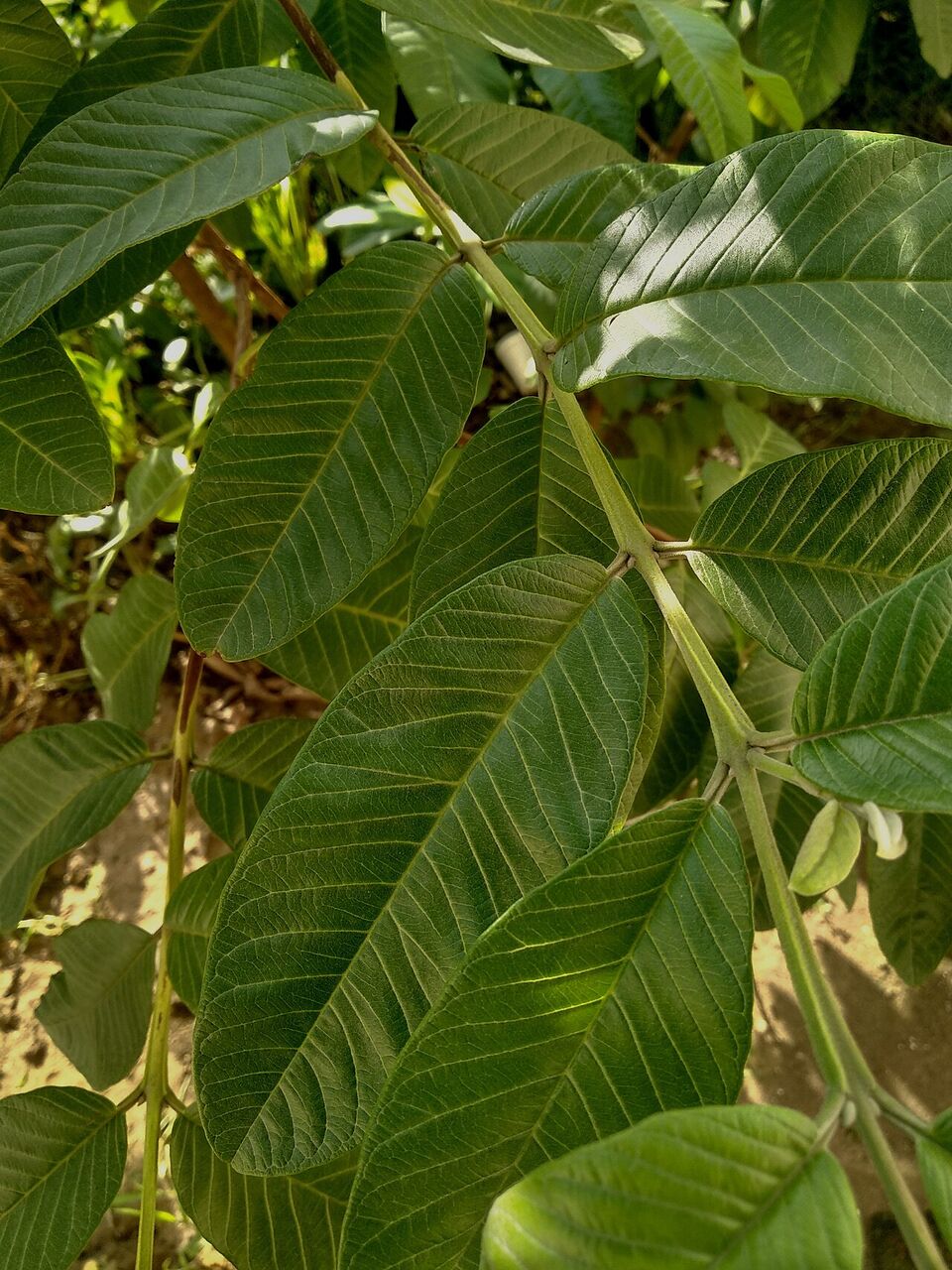
Guava is an evergreen shrub or small tree, 3 to 10 metres tall, with an open crown. Its branches are often low and drooping, and it sends up root suckers (new shoots from the roots). The trunk (bole) can be 20 to 30 cm across. The tree flowers all year round. The fruit is yellow-skinned, ovoid or pear-shaped, 4 to 12 cm across, and can weigh up to 500 g. Leaf shape, arrangement and size are not documented in the sources read.
Where it grows
Adaptable to humid lowland tropical climates up to about 1,500 metres, according to Useful Tropical Plants.
- Native to
- South America, from Peru north to Mexico and the Caribbean, according to Useful Tropical Plants (see review notes).
- In Nigeria
- GBIF holds 168 occurrence records from Nigeria. A Nigerian ethnobotanical survey recorded use of the plant in Oyo and Osun states.
- States
- Oyo, Osun
Scientific details
- Scientific name
- Psidium guajava L.
- Family
- Myrtaceae
Sources
Not yet reviewed Drafted with AI from the sources below. Treat with care.
- Ethnobotanical uses of plants in Nigeria: an analysis of current research trends and patterns. Journal of Ethnobiology and Ethnomedicine (via Europe PMC full text), 2025. PMID 40841969.
- Useful Tropical Plants: Psidium guajava. Useful Tropical Plants database.
- Therapeutic Prospects of Psidium guajava Leaves: An Antibacterial Assessment Against Clinically Important Pathogens. International Journal of Microbiology (via Europe PMC full text), 2025. PMID 41476896.
- Bioactive Compounds from Guava Leaves (Psidium guajava L.): Characterization, Biological Activity, Synergistic Effects, and Technological Applications. Molecules (via Europe PMC full text), 2025. PMID 40142053.
- An Ethnobotanical Survey and Pharmacological and Toxicity Review of Medicinal Plants Used in the Management of Obesity in the North Central Zone of Nigeria. Journal of Obesity (via Europe PMC full text), 2025. PMID 40026359.
- GBIF Backbone Taxonomy: species match for Psidium guajava (accepted name, usageKey 5420380). Global Biodiversity Information Facility.
- GBIF occurrence search: Nigeria records for Psidium guajava (taxonKey 5420380). Global Biodiversity Information Facility.