African snakeroot
- Igbo Akata
- Yoruba Asofeyeje
Rauvolfia vomitoria · also called Swizzle stick
.jpg)
What it is used for
- High blood pressure root · traditional use
- Sedative, psychosis and epilepsy traditional use
- Skin problems and gingivitis traditional use
- Fever and colic in children traditional use
Tap a use to read how it is prepared and how well it is supported.
How each use is prepared
Parts used: root.
High blood pressure
Traditional useBlood pressure · root · hypertension
How it is prepared: Root preparation, as reported in PROTA. The exact preparation is not given in the text read.
People use it this way, but it has not been tested.
PROTA reports the root being used for high blood pressure. The plant's reserpine is a licensed antihypertensive drug, but that does not show the whole plant or a home preparation works or is safe. No human trial of the plant was opened. Do not stop or replace prescribed blood-pressure medicine. [1][3]
Sedative, psychosis and epilepsy
Traditional useOther · as reported
People use it this way, but it has not been tested.
PROTA lists the plant for use as a sedative and against psychosis and epilepsy. Reserpine can cause depression, so the mental-health use is a serious safety concern (see safety). No human study of the plant for these uses was opened. [1][3]
Skin problems and gingivitis
Traditional useSkin · mouth wash
How it is prepared: Wash or mouth wash, as reported in PROTA.
People use it this way, but it has not been tested.
PROTA lists washes for skin problems and a mouth wash for gingivitis. No experimental study of these uses was opened. [1][2]
Fever and colic in children
Traditional useFever · wash, as reported
How it is prepared: Wash given to children, as reported in PROTA.
People use it this way, but it has not been tested.
PROTA lists child washes for fever and colic. This is a traditional report and not dosing guidance. Reserpine is a potent drug, so a child should not be given a root preparation without a clinician's advice. [1]
Safety
The main safety concern is reserpine. The Renese-R label warns about depression, including suicidal thoughts, and about additive sedation with other drugs that depress the nervous system. Do not use the plant to treat high blood pressure or mental illness in place of medical care, and do not combine it with other sedatives or with alcohol.
Side effects
- Reserpine labelling warns of depression, which can be severe and can include suicidal thoughts, and advises that patients with a history of depression be monitored closely. [3]
- Reserpine has additive nervous system depression with other central nervous system depressants, including barbiturates and alcohol. [3]
Poisoning and overdose
- No toxicity study of the whole plant or root preparation was opened. The toxicity described here comes from reserpine labelling, and the amount of reserpine in a home preparation is unknown. [3]
If you take other medicines
- Levodopa: reserpine can reduce its effect, so do not combine them without medical advice. [3]
- Monoamine oxidase inhibitors (MAOIs): reserpine can interact with them, so avoid combining them. [3]
- Digitalis and quinidine: reserpine can increase the risk of arrhythmia (irregular heart rhythm) with these drugs. [3]
- Anaesthesia: reserpine can cause low blood pressure during surgery, so the anaesthetist should be told about any use. [3]
Pregnancy and breastfeeding
- Reserpine is labelled pregnancy category C, to be used only if clearly needed. No source opened addresses the plant itself in pregnancy. Do not use it without medical advice. [3]
Children
- No sourced guidance on the plant for children. PROTA reports child washes, which is not dosing guidance. Do not give root preparations to children without a clinician's advice. [1]
About this plant
A tree whose root is used in traditional African medicine, including for high blood pressure. It contains reserpine, a potent prescription drug that lowers blood pressure and can cause depression, so the plant should not be used in place of medical treatment.
How to recognise it
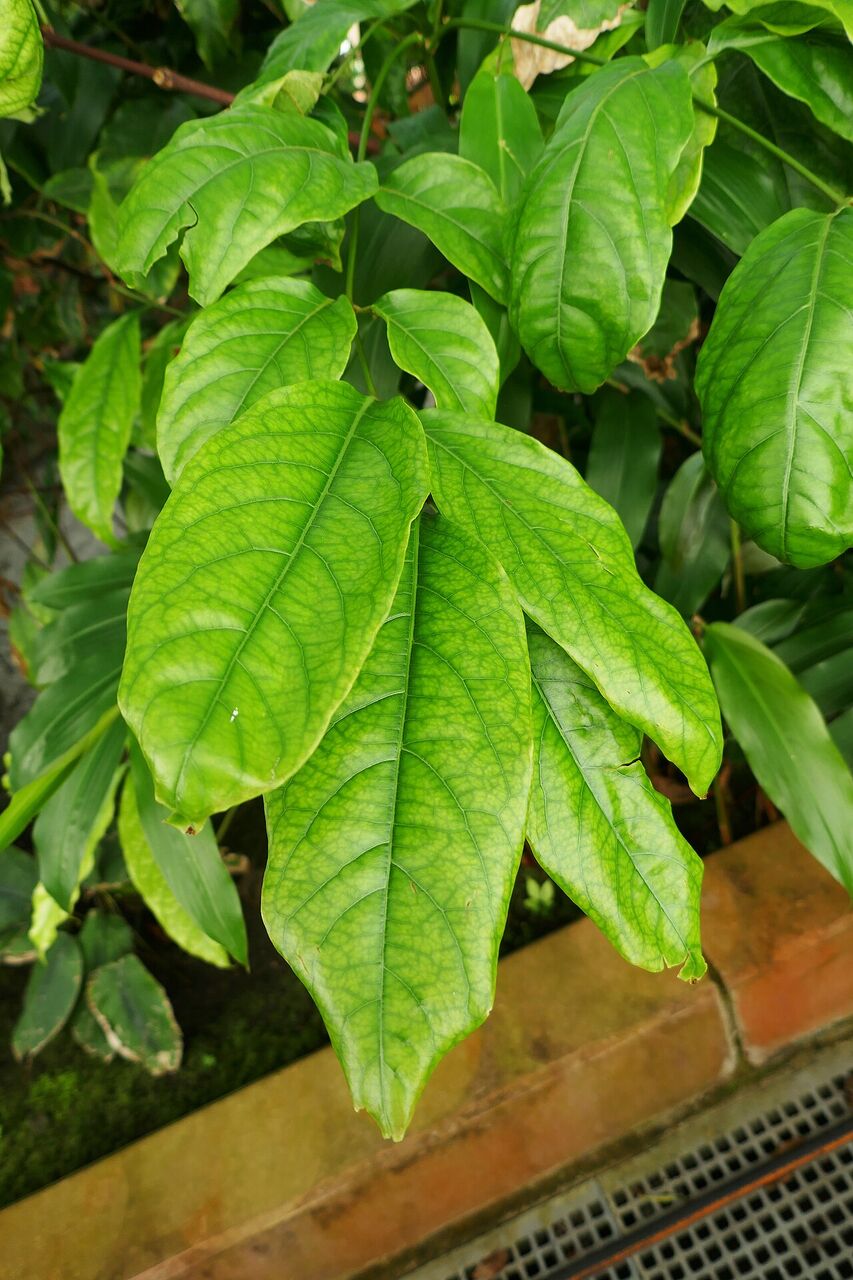
Rauvolfia vomitoria is a tree that can grow up to about 20 m, and sometimes to about 40 m. Its leaves are arranged in whorls of three to five, crowded at the tips of the branches. The leaves are simple (one blade, not divided) and entire (smooth-edged), with no stipules (small leaf-like appendages at the leaf base). The blade is elliptical to narrowly elliptical, about 2.5 to 27 cm long and 2 to 9 cm wide. The leaves are the easiest feature to check in the field, because the whorl of three to five leaves at a branch tip is distinctive for this genus. Flowers and fruits are not described in the sources read.
Where it grows
- Native to
- Not confirmed in the sources read (see notes).
- In Nigeria
- Ajao et al. (2022) list the plant among the useful angiosperms of southwestern Nigeria with the Yoruba name Asofeyeje. This is the only Nigerian locality source read, so it shows the plant is known in the Yoruba-speaking region but does not map its range.
Scientific details
- Scientific name
- Rauvolfia vomitoria Afzel.
- Family
- Apocynaceae
- Main compounds
- reserpine
Sources
Not yet reviewed Drafted with AI from the sources below. Treat with care.
- PROTA (Plant Resources of Tropical Africa). Rauvolfia vomitoria Afzel. (PROTA species record). Pl@ntUse, PROTA.
- Ajao AA, Mukaila YO, Sabiu S. Wandering through southwestern Nigeria: An inventory of Yoruba useful angiosperm plants. Elsevier, 2022. PMID 35024488.
- Renese-R (reserpine and polythiazide) tablets, DailyMed drug information label. DailyMed, U.S. National Library of Medicine, 2006.
- Rauvolfia vomitoria Afzel. GBIF species record (backbone taxonomy). Global Biodiversity Information Facility.
- Rafiu BO, Omotayo AO, Lawal IO, Aremu AO. Ethnobotanical uses of plants in Nigeria: an analysis of current research trends and patterns. Journal of Ethnobiology and Ethnomedicine (BMC), 2025. PMID 40841969.