Aidan fruit
- Igbo Oshosho, Uhio
Tetrapleura tetraptera · also called Prekese

What it is used for
- Malaria and fever traditional use
- Rheumatic pain and inflammation traditional use
- High blood pressure traditional use
- Diabetes traditional use
Tap a use to read how it is prepared and how well it is supported.
How each use is prepared
Parts used: fruit.
Malaria and fever
Traditional useMalaria
People use it this way, but it has not been tested.
A 2024 review lists the plant among remedies reported for malaria fever. This is a list of reported use, not evidence that it works. No clinical trial of this use was found in the sources read, and the parts used are not specified in the sources read. [4]
Rheumatic pain and inflammation
Traditional usePain and swelling
People use it this way, but it has not been tested.
The same 2024 review lists rheumatic pains and inflammation among reported traditional uses. No study testing this use in people was found in the sources read, and the parts used are not specified. [4]
High blood pressure
Traditional useBlood pressure
People use it this way, but it has not been tested.
Both the 2024 review and a 2024 rodent safety study list hypertension (high blood pressure) among traditional uses. No study of blood pressure in people or animals was found in the sources read. [4][5]
Diabetes
Traditional useBlood sugar
People use it this way, but it has not been tested.
The introduction of a 2024 rodent safety study lists diabetes among traditional uses. No study of blood sugar was found in the sources read, so this is reported use only. [5]
Safety
Aidan fruit has been studied only in animals and laboratory reviews, and no human safety data were found in the sources read. In a 14-day rat study no deaths were reported, but kidney changes were seen on microscopy, and the seedpod is listed as a fish poison. Pregnancy, child and drug-interaction safety are not documented, so do not take it as a remedy without advice from a health worker.
Side effects
- No side effects in people are documented in the sources read. The kidney findings from the rat study are listed under toxicity.
Poisoning and overdose
- Useful Tropical Plants lists the seedpod as used to poison fish, which it gives as the known hazard. It does not describe effects on people. [3]
- In a 14-day repeat-dose study in rats of a hot-water fruit extract at 500, 1000 and 2000 mg/kg, the authors report no deaths and no obvious signs of toxicity. Microscopy of the kidneys showed areas of bleeding and congested tubules, but the source's wording does not clearly state which dose group these changes were seen in. This is rodent data only. [5]
- The LD50 (the dose that kills half of the test animals) of a fruit extract was reported above 5000 mg/kg. The 2024 review's authors call for formal toxicology studies. [4]
If you take other medicines
- No drug interaction data were found in the sources read.
Pregnancy and breastfeeding
- No source read addresses safety in pregnancy or breastfeeding; data are lacking.
Children
- No source read addresses use in children; data are lacking.
About this plant
Aidan fruit, also called prekese, is a tree whose four-winged pods are used in traditional remedies. Its fruit has been studied only in animals and in laboratory reviews, so its effects and safety in people are not established.
How to recognise it
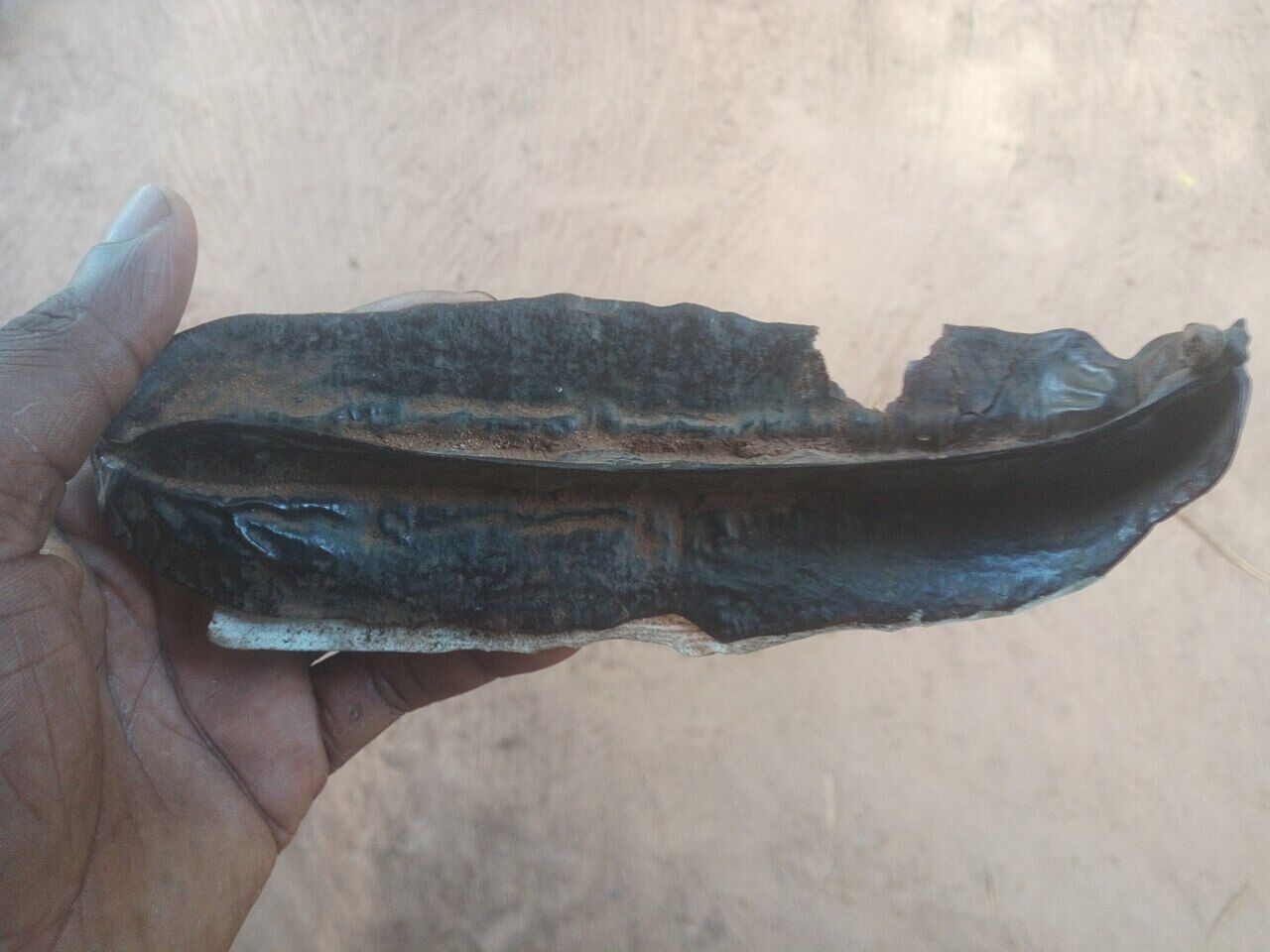
Tetrapleura tetraptera is a deciduous tree, meaning it sheds its leaves at certain times of year, and it grows 20 to 25 metres tall with a trunk (bole) 50 to 90 centimetres thick. Its leaves are sessile, which means they have no stalk of their own, and they are sparsely hairy; they sit along a common stalk 15 to 30 centimetres long. The flowers are pinkish cream turning orange and grow in spike-like panicles (branched flower clusters) 5 to 20 centimetres long. The fruit is a pod 15 to 25 centimetres long and about 5 centimetres wide, with four wing-like ridges running along its length. Each pod holds small, black, hard, flat seeds about 8 millimetres long. Bark and roots are not described in the sources read.
Where it grows
Forest, secondary forest, riverine (river-edge) forest and outlying patches of savannah woodland, according to Useful Tropical Plants. That source also gives an elevation of up to about 600 metres, citing the FAO Ecocrop database; that figure is not Useful Tropical Plants' own observation.
- Native to
- Senegal to Sudan, Uganda and Kenya, south to Angola and Tanzania (Useful Tropical Plants).
- In Nigeria
- GBIF holds 96 occurrence records from Nigeria. The sources read do not name particular Nigerian states or regions.
Scientific details
- Scientific name
- Tetrapleura tetraptera (Schumach. & Thonn.) Taub.
- Family
- Fabaceae
Sources
Not yet reviewed Drafted with AI from the sources below. Treat with care.
- GBIF Backbone Taxonomy. GBIF species match: Tetrapleura tetraptera (Schumach. & Thonn.) Taub. (ACCEPTED, usageKey 5347354). Global Biodiversity Information Facility (GBIF), 2026.
- GBIF. GBIF occurrence search: Nigeria records for taxonKey 5347354 (96 records). Global Biodiversity Information Facility (GBIF), 2026.
- Useful Tropical Plants database. Tetrapleura tetraptera (Useful Tropical Plants). Useful Tropical Plants, 2026.
- Mensah RQ, Adusei S, Azupio S, Kwakye R. Nutritive value, biological properties, health benefits and applications of Tetrapleura tetraptera: An updated comprehensive review.. Heliyon; full text via Europe PMC PMC10955287, 2024. PMID 38515660.
- Ekeanyanwu CR, Nkwocha CC, Ekeanyanwu CL. Unveiling phytochemical diversity and safety profile of hot water extract from Tetrapleura tetraptera fruit.. BMC Complementary Medicine and Therapies; full text via Europe PMC PMC11520151, 2024. PMID 39443881.
- Rafiu BO, Omotayo AO, Lawal IO, Aremu AO. Ethnobotanical uses of plants in Nigeria: an analysis of current research trends and patterns. Journal of Ethnobiology and Ethnomedicine (BMC), 2025. PMID 40841969.
- Oladele JO, Ajayi EI, Oyeleke OM, Oladele OT, Olowookere BD, Adeniyi BM, Oyewole OI, Oladiji AT. A systematic review on COVID-19 pandemic with special emphasis on curative potentials of Nigeria based medicinal plants. Heliyon, 2020. PMID 32929412.
- Adetunji TL, Oyetunde-Joshua F, Ogunro OB, Andrew O, Amoo SO. Traditional Medicinal Plants Used for Cancer Treatment in Sub-Saharan Africa: A Systematic Review. Plants (Basel), 2026. PMID 42357155.