Ukwa
- Igbo Ukwa
Treculia africana · also called African breadfruit

What it is used for
- Sap as medicine sap · traditional use
- Seeds eaten as food seed · traditional use
- Type 2 diabetes diet seed · traditional use
- Cough, malaria, anaemia, ulcer traditional use
Tap a use to read how it is prepared and how well it is supported.
How each use is prepared
Parts used: seed, sap.
Sap as medicine
Traditional useOther · sap
People use it this way, but it has not been tested.
Stated only in one botanical source (Useful Tropical Plants), with no condition named and no study cited. The same source says the sap of male trees is caustic and toxic. The two statements are not reconciled in the source, so the sap should be treated as having unknown use and unknown safety. [1]
Seeds eaten as food
Traditional useNutrition · seed
How it is prepared: Seeds eaten as a snack, as recorded in a survey of Nigerian fermented foods
People use it this way, but it has not been tested.
This is a food use, not a medicinal one. It is recorded here because the seed is the part most commonly named in Nigeria. [2]
Type 2 diabetes diet
Traditional useBlood sugar · seed
People use it this way, but it has not been tested.
The introduction of an animal study names Nigerian practitioners who often recommend breadfruit to people with type 2 diabetes. No survey or trial of that advice is cited there. In the same study, a boiled-seed extract reduced glucose tolerance in healthy rats after two weeks and raised LDL cholesterol at the 100 mg/kg dose. The authors suggest that the seed may worsen glycaemic status in people with diabetes. The seed is not shown to help diabetes. [4]
Cough, malaria, anaemia, ulcer
Traditional useOther
People use it this way, but it has not been tested.
The Yoruba plant inventory of southwest Nigeria lists this tree for these conditions and others, including haemorrhoids, venereal diseases and Guinea worm. The table text read does not state which plant part is used, and the name Afon is Yoruba, not Igbo. No trial was found. [5]
Safety
The sap of male trees is described as caustic and toxic. Data are lacking on the safety of the sap from female trees, of the seeds used as medicine, and of any use in pregnancy or children. Eating the seeds as food is not evidence of medicinal safety.
Poisoning and overdose
- The sap of the male tree is described as caustic and toxic. [1]
If you take other medicines
- Data are lacking.
Pregnancy and breastfeeding
- Data are lacking.
Children
- Data are lacking.
About this plant
A large evergreen tree of tropical Africa, known in Nigeria for its large seeds, which are eaten as a snack. Its medicinal use is mentioned only briefly in one botanical source, and no evidence is cited for it.
How to recognise it
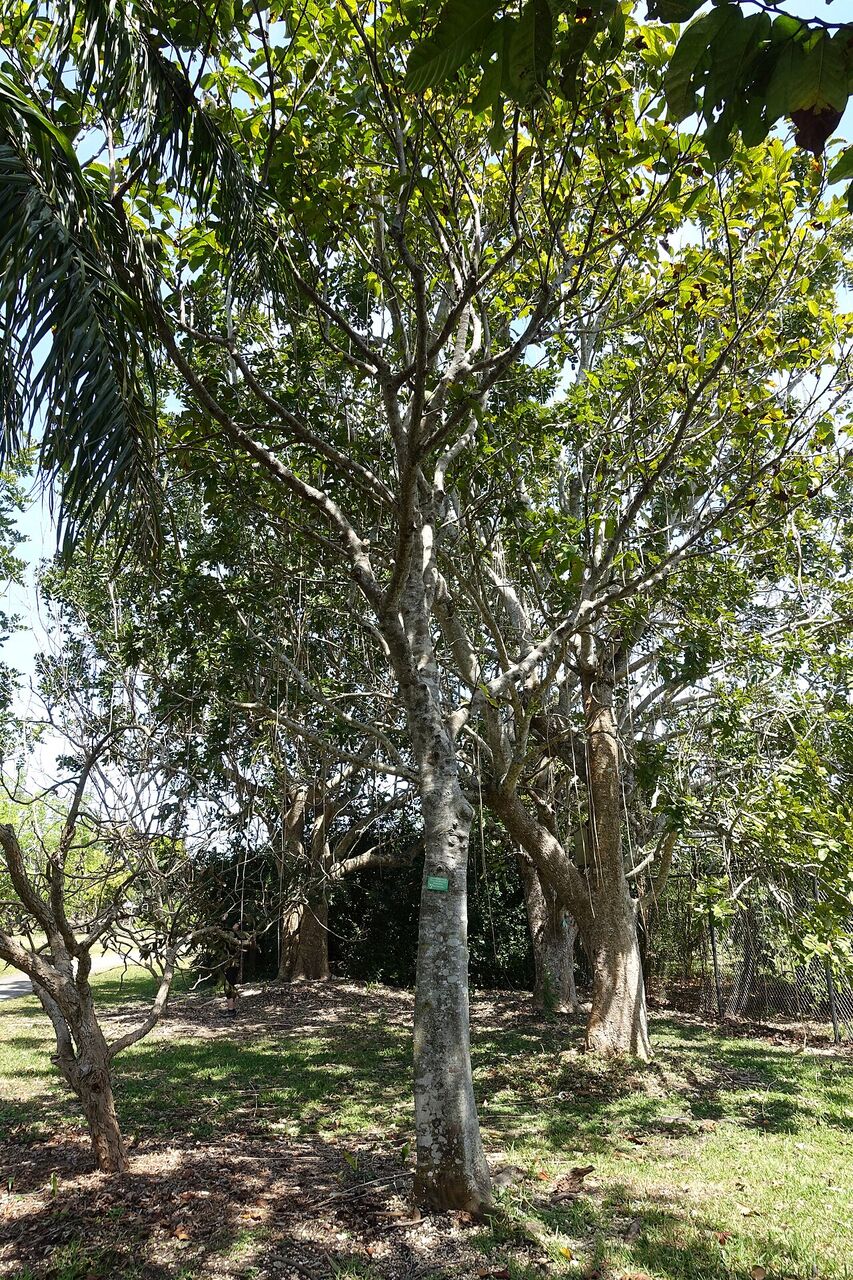
A large, slow-growing evergreen tree, usually 15 to 30 metres tall (sometimes up to 50 metres), with a dense, spreading crown and a fluted bole. Fruits grow from the trunk. Leaves: no leaf description was found in the sources read, so the leaves are not described here; check them against a living tree or a herbarium sheet before relying on this record. Flowers: photographed in one source but not described in the text read.
Where it grows
Usually found near streams or in swampy areas in forests, at altitudes up to 1,500 metres.
- Native to
- Tropical Africa, from Senegal to southern Sudan, Uganda and Kenya, south to northern Angola, Zambia, Malawi and Mozambique.
Scientific details
- Scientific name
- Treculia africana Decne.
- Family
- Moraceae
Sources
Not yet reviewed Drafted with AI from the sources below. Treat with care.
- Useful Tropical Plants: Treculia africana. Useful Tropical Plants.
- An inventory of selected Nigerian fermented foods: enhancing the trajectory of sustainable development goals. NPJ Science of Food, 2026. PMID 42010238.
- GBIF occurrence search: Treculia africana, country NG (record count 92). GBIF.
- Eleazu K, Maduabuchi P, Eleazu C. Effect of ethanol extract of boiled breadfruit (Treculia Africana) seed on the oral glucose tolerance, lipid profile, and body weight of normoglycemic albino rats. Food Science & Nutrition, 2018. PMID 29983953.
- Ajao AA, Mukaila YO, Sabiu S. Wandering through southwestern Nigeria: An inventory of Yoruba useful angiosperm plants. Heliyon, 2022. PMID 35024488.